|
|
Concatenation Science Communication
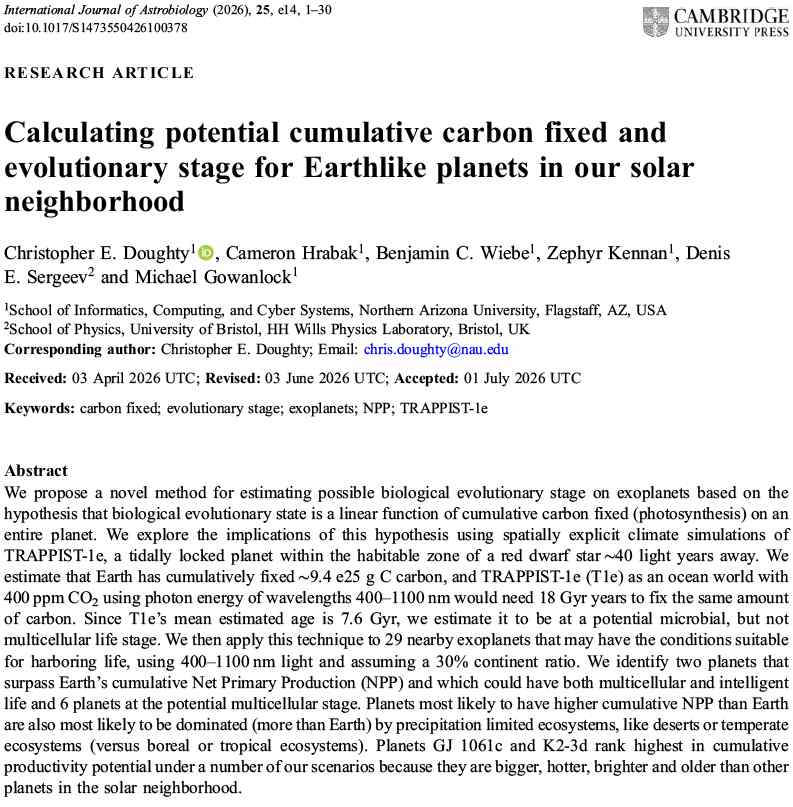
Autumn 2026 Estimating exoplanetary biological development! There is a new paper out from folk at the Northern Arizona University, USA, and a collaborator based at the University of Bristol, Britain. It looks at the likelihood an exoplanet will attain multicellular life and also potential intelligent life, not just on the exoplanet's similarity to Earth and not based on the exoplanet's age but the total amount of carbon it could have photosynthetically fixed over its lifetime to date. It is an intriguing approach though -- as the paper's authors fully admit -- there are a good number of assumptions made (and of course we know nothing of any exoplanet's world-system while we have a fair bit on knowledge of the Earth system). The number of assumptions means that its conclusions should by no means be taken as gospel but it does provide an interesting pointer and it is a novel approach.
Simply said, it says that exoplanets around cooler stars would see a lower rate of carbon fixation by photosynthesis and so it would take longer for life on them to have the cumulative photosynthetic mileage on them tor intelligence to rise as sis Earth.
They conclude that, of 29 nearby exoplanets considered, two planets that potentially surpass Earth’s cumulative Net Primary Production (NPP -- see also productivity), could have both multicellular and intelligent life, and that 6 planets could be at the potential multicellular stage. The two with the lifetime and cumulative NPP to potentially see intelligent life arise are GJ1061c (12 light years away) and K2-3d (143 light years away). Not withstanding that both are orbiting Red Dwarfs (of which, this paper notwithstanding, I'm not sure that they can support complex multicellular life(?)) K2-3d has been reclassified as a mini-Neptune and not a super-Earth.
The authors are (rightly) wary of life on potentially habitable planets around red dwarf stars but, if it is possible, they conclude it would take much longer than on Earth, and so for the most part, potentially habitable exoplanets near Earth are only microbial.
The primary research is Doughty, C. E. et al (2026) Calculating potential cumulative carbon fixed and evolutionary stage for Earthlike planets in our solar neighborhood. International Journal of Astrobiology, vol. 25, e14.
|
|
30% discount offer
£31.99 £22.39 /US$49 US$34.30
using the code AUFLY30 only at
global.oup.com
Once on the OUP page click 'add to basket' and then that next page has a promotional code box on the lower left.
|
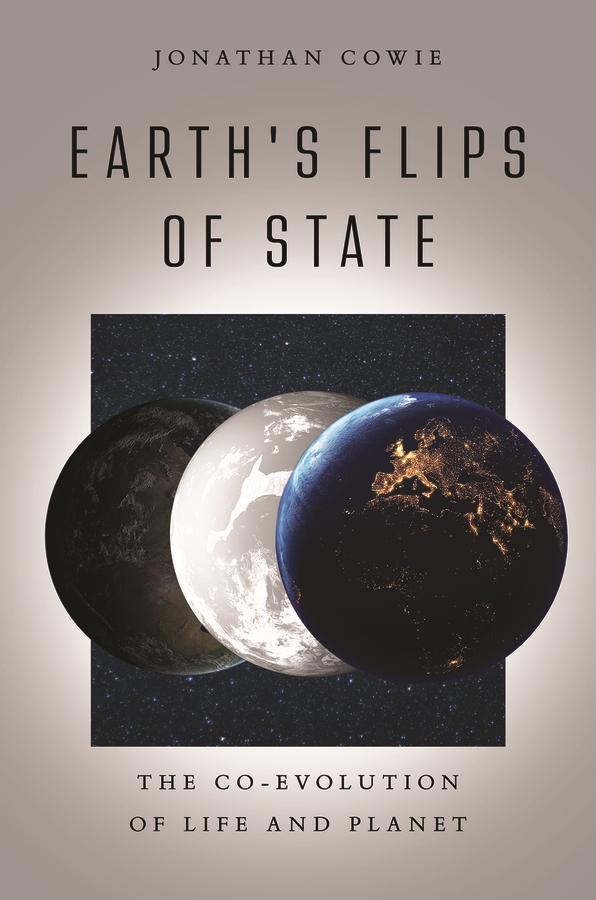
Autumn 2026 My latest is out! As I have occasionally, briefly hinted at the past few years, I have been working on a new book: new book and new subject matter (climate change was just too depressing) but could not escape the old one entirely. This book has had a long gestation: a few years to research and write, two and a half years in peer review and a year-and-a-bit in pre-production. Just a small cadre of researchers have been working on the deep-time Earth system narrative the past couple of decades and there is much debate, but we also now know a fair bit. What is perhaps contentious is whether or not we today are seeing the Earth system go through a major critical transition possibly as significant as others due to a biological, evolutionary innovation? Today we have just one species: that is affecting the global commons including atmospheric greenhouse gases, that manages most of terrestrial photosynthesis, that has globally produced as much 'stuff' as there is biomass... In short, I have pushed the envelope on this one in a variety of ways. One such is to take the deep-time Earth system narrative and see how it might apply to life elsewhere. How this will all be received as yet I know not, and so the coming months will be rather interesting.
Full details of this title are here.
And it is available directly from the publisher who operates both in Britain and N. America. (30% discount off the paperback offer: see left and also below.)
|
|
See also:
Hausfather, Z. (2026) Governments must prepare for the ‘super El Niño. Nature, vol. 657, p858
and
Dinneen, J. (2026) What super El Niño means for global weather patterns. Nature, vol. 657, p864-5.
|
Autumn 2026 The forthcoming 2027 El Niño looks like being a big one! And quite a few people have asked me what we can expect here in Blighty? So I thought I'd share a little (but not explain what an El Niño is: so there's the link).
I should say up front that, while I am certainly into climate change biology and palaeoclimatology, I am not a meteorologist, so you should defer the notions here to that of a bona fide expert rather than a somewhat tangential one.
The 2027 El Niño may well be stronger than the 1877 El Niño which was the strongest one to date on record. That even caused a number of famines. No need though to panic unduly as 1877 was before the green revolution and before the world was so connected in terms of food shipping. Having said that, the illegal war in the bread basket nation of Ukraine, and the Middle East fossil fuel constraints on chemical feedstocks for fertilisers, do not help.
It should be noted that (like interglacials) El Niño event impacts on the UK are all different. Also, Britain is far from the Pacific and, though it is affected by the El Niño,, it is not affected nearly as much as Pacific Rim nations. Britain may or may not experience a warmer than usual year but may expect greater seasonality (colder winter and warmer summer). The former may be facilitated by greater Rossby waves which are known to be associated with El Niño events and some also associate them increasing with global warming (I have some sympathy with this last). While Britain may not have an overall warmer year (though it is possible), the world most likely will be warmer (so, so much for the Paris Accord's 1.5°C) and a record-breaker. Summer drought periods are also possible as are short, sharp heavy downpours due to heat evaporation from surrounding seas and heat over land (convective thunder storms): there may be some flash flooding. All of which is not good for crops; it will be another tough year for western European farmers. Given all of this, expect more food inflation in 2027.
|
|
|
Autumn 2026 Star struck -- Golly gosh! Seems I'm in this month's Astronomy Now.
The puff is appreciated, and I am happy to return the favour.
Astronomy Now can be found at astronomynow.com. A must for amateur astronomers.
:-)
|
|
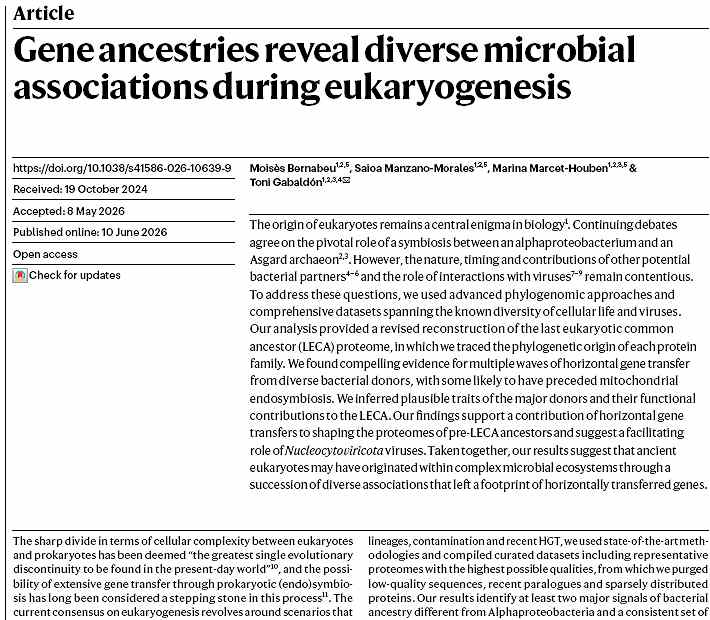
Bernabeu, M. et al. (2026) Gene ancestries reveal diverse microbial
associations during eukaryogenesis. Nature, vol. 656, p399-405.
|
Summer 2026 When did more complex (eukaryotic) cells evolve from more simple bacteria-like (prokaryotic) cells? And if you are having a sense of déjà vu then it may be because this is how I began a previous post back in the spring which in turn built on even earlier work last year. It is often thought that more advanced cells, with a nucleus and organelles (eukaryotes), arose after the first Snowball Earth somewhere around 2.4 – 2.2 billion years ago and a few think that the two events were coincident with some, including myself, that proto-eukaryotes at least (and possibly true ones?) arose before Snowball I. Indeed, in part of my next major project (shortly due for a launch in September) I hypothesise that proto-eukaryotes at least may have had a contributing hand in the carbon drawdown that triggered Snowball I. And so we come to a new paper in the journal Nature.
Some consider that the evolution of eukaryotes (eukaryogenesis) was more-or-less a singular event, whereas I (and some others) opine that multiple events were involved and as such it is a comparatively 'easy' evolutionary step. Enter a small team of four researchers based in Barcelona, Spain, and led by Toni Gabaldón have looked at genes across the tree of life, particularly among eukaryotes. Their analysis concludes that eukaryogenesis was a more gradual process in which the prokaryotic-to-eukaryotic transition was achieved through serial interactions with a diverse range of bacterial partners.
If this was so then there may have been a considerable period of time (hundreds of millions of years?) between the 'first eukaryotic common ancestor (FECA) and the last eukaryotic ancestor (LECA). And this begs the question as to at what point did early, or even proto-, eukaryotes play a significant part in global ecosystem function, particularly in carbon drawdown, and could they indeed, as per my contemplation, have played a part in triggering Snowball I?
Meanwhile, news of my next major project will come shortly. (Though some of you may recall that a few months ago I teased the artwork.)
|
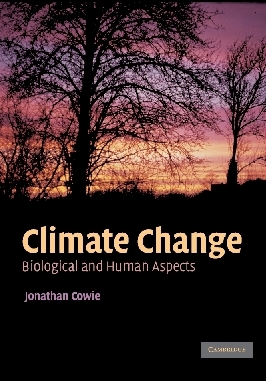
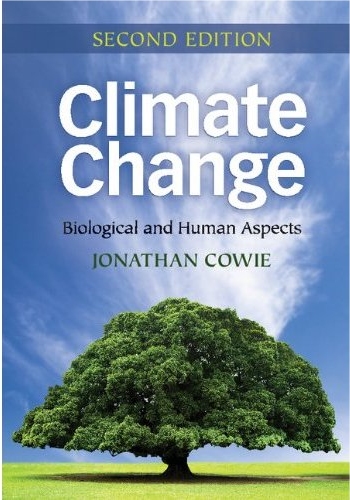 The page numbers in text right relate to
this edition which has a substantially
(nearly a third) extra word count on the first edition above (top).
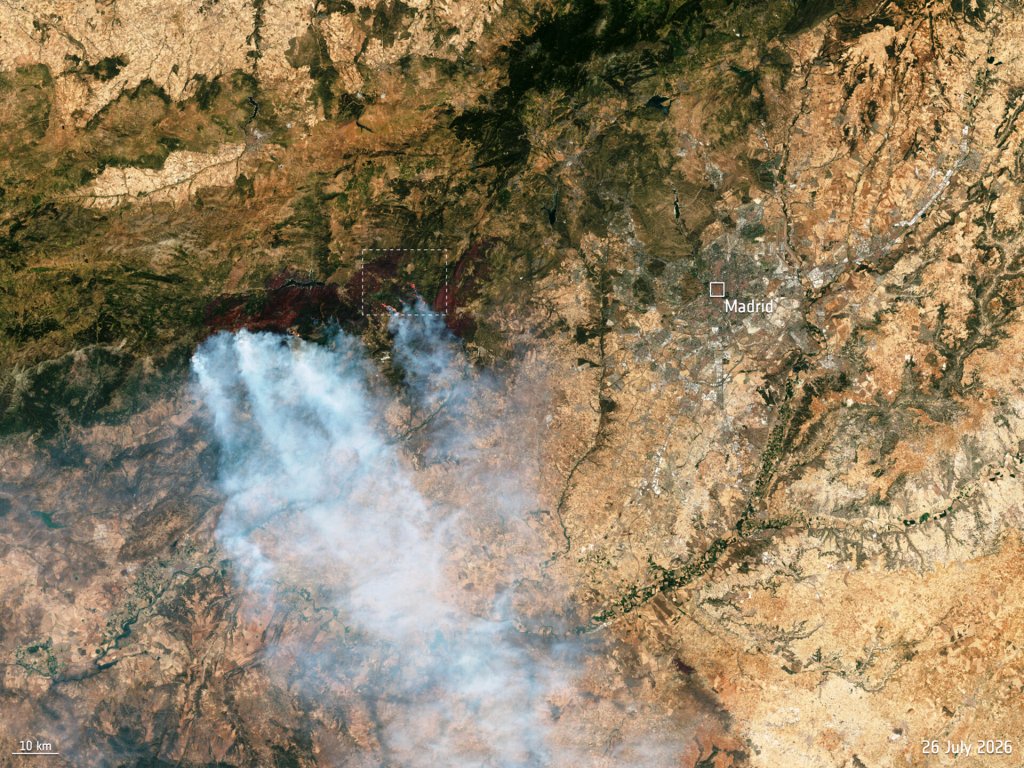
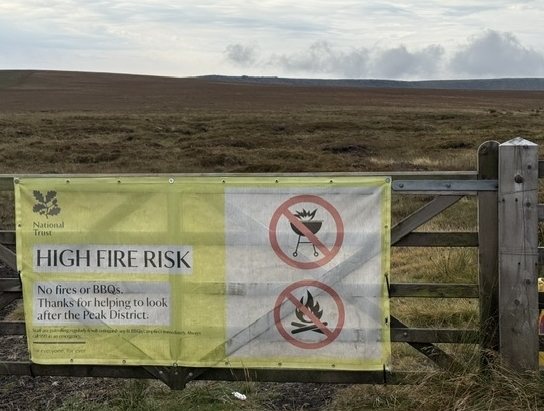 There were wildfire warnings all over
the Peak District national park. |
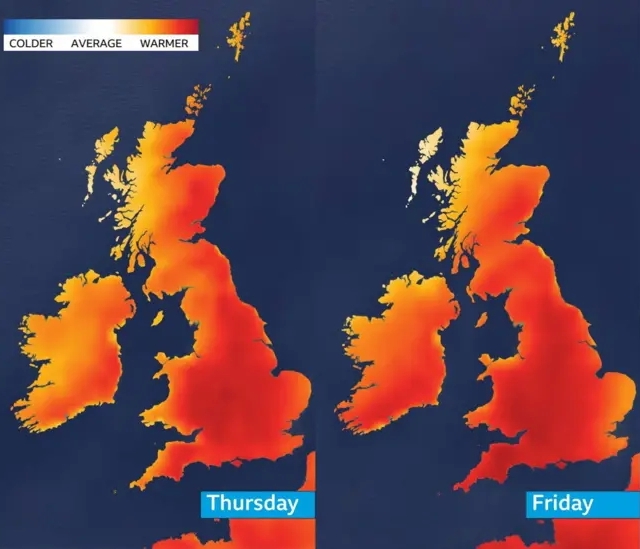
Summer 2026 Wild fires sweep southern Europe. Further to the May heatwave below, Britain had its third heatwave of the year in July, and again in August, and wildfires affected southern Europe, Spain, France (causing fear and stress), Italy, Greece and Crete as well as the Cairngorms in Scotland and even down in London. And neither did the USA escape wildfires in 2026.
In the much larger and updated second edition of Climate Change: Biological & Human Aspects (disturbingly now well over a decade old and its first edition just shy of two decades ago) I do cover wildfires (especially p302 & 306) extreme weather events including heatwaves and climate refugees. But with regard to the latter, I primarily focus on refugees due to sea-level rise and not heatwaves. I also note that the human impact cost is born more by southern nations than the global north. However, with homes lost in Spain and France, thousands evacuated, it is now very clear that there are and will be climate refugees in the global north caused by wildfires: though I did note homes lost in Canada (p402) and Australia (p325) from wildfires.
Europe's 2026 summer drought also impacted farms' crop yields. Climate Change: Biological & Human Aspects covered historic droughts (p215), current drought likelihood (p265), forecast N. American droughts (p297 onwards), drought impact on crops (p305), Australia drought impact on crops (p325), El niño and droughts (p402, and 2026 was an l niño year), droughts generally (p421 onwards), climate change and food security (p425 onwards), and the 2003 European heatwave and crop impacts (p430 onwards) among other heatwave and drought biological impacts of climate change.
I did though cover in some depth human mortality rates due to extreme weather events and heatwaves (especially p398-401) and in Britain this summer's heatwave at the end of July saw excess mortality on track to be record-breaking.
The 2026 drought caused European river-flow to decline and the Danube's record low flow rate resulted in nuclear power plants in Hungary and Romania shutting down. (As it happened, in 2001 I had a personal tour of one of the reactor plants affected at Cernavoda courtesy of Atomic Energy of Canada Limited.)
In short, climate science predicted all of this, so any lack of preparedness is solely down to the political class. Which is why it is exceptionally sad that some politicians, even today, still deny the seriousness of climate change and its impacts.
Additionally, August saw my visiting the Peak District National Park coincidentally a few days ahead of a visit by the Parliamentary Under-Secretary of State for Nature, Jenny Riddell-Carpenter: well, it is good to keep ahead of politicians. She was coming to see areas affected by wildfires: sadly some ancient woodlands were lost that had been accruing biodiversity over centuries. Large areas of upland moorland saw wildfires. I went to moorland overlooking Snake Pass as did she.
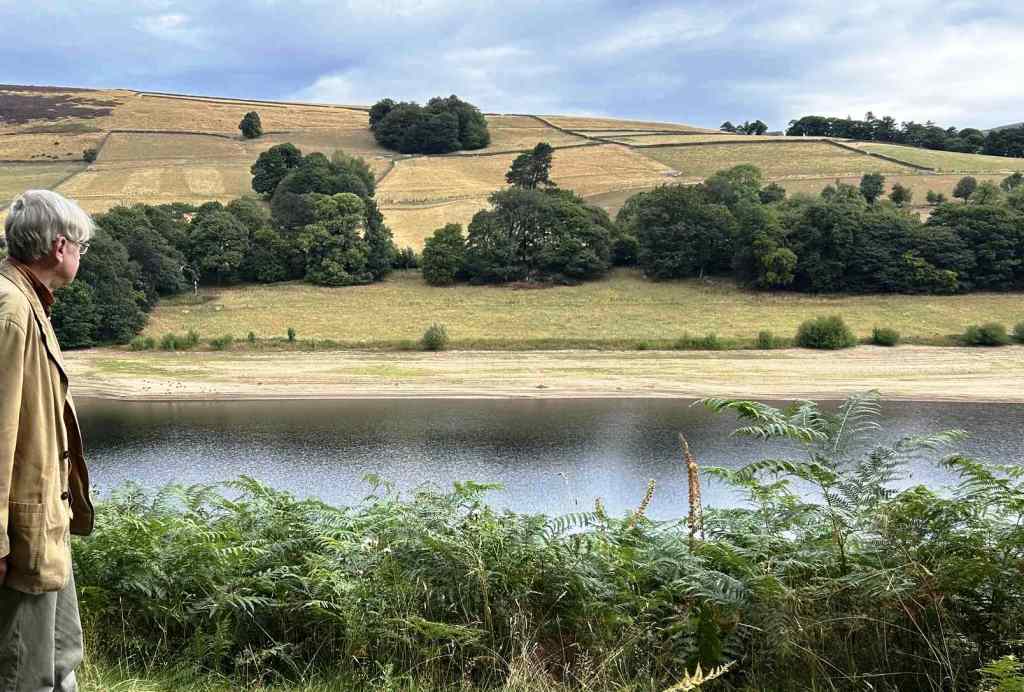
I also visited the Derwent Reservoir that in the drought was well down on what it should have been.
|
|
|
Looking across the Derwent Reservoir to its far side and it is very noticeably lower than its usual level. Normally it is full, with the excess flowing over a weir into the River Derwent. As it was the Derwent Reservoir, together with the upper Howden Reservoir, was only 40% depleted (60% full). We did also visit the lower valley at Curbar. There, the river flow was down but there was a steady flow from the limestone aquifers from the surrounding heights of Curbar Edge. There was seemingly plenty of water but that was only because the Derwent has been historically managed with a number weirs that are part of the 18th and 19th century water-powered mills for the cotton industry: the Peak District was one of the cradles of the industrial revolution, hence the Derwent water mills. This rural, historic industrial area is a World Heritage Site.
From a distance, to the untrained eye, the trees away from the reservoir and valley floor seemed fine but close inspection revealed that many had leaves suffering from the lack of water. Some trees shed branches as a way of stopping water loss. Most of the upland heather (specifically here ling heather (Calluna vulgaris) was in flower and this is not unusual for the time of my visit (mid-August). However, my biologist host to the Park informed me that flowering began around a month early. Strictly speaking, this was not a true phenological phenomenon (seasonal life cycle changes due to climate change), but a heat stress and drought response (albeit the heat and drought exacerbated by human-induced climate change and that here the early summer heat -- in early July -- was a 'phenological' trigger, but it was an intensity of early summer thing as opposed to a seasonal shift thing).
Grass growth has been zero over most of this summer and farmers have even been resorting to use their stocks of hay that was meant for this coming winter. Given that this summer has seen European-wide heatwaves and drought, expect considerable food inflation this winter and into two-thirds of next year. As with, but less so in the El Niño year of 2015 when US and Indonesian rice crops were poor, and more so in 2007/2008 with reduced rice crops in India and parts of east Asia (among corroborating medium-term economic factors), with crop failures in bread-basket nations, a future year of poor crops in bread-basket nations will hurt the currently ~1.5 billion living on less than US$1.25 a day. (How folk have forgotten the food riots of 2008.) During that crisis rice prices rose by 217%, wheat by 136%, maize by 125% and soybeans by 107%. The 2011 CGIAR Research Programme on Climate Change, Agriculture and Food Security (CCAFS) report needs to be noted by the political classes. This is not new news -- and as said this is covered in two of my climate change books (2007 and substantially expanded 2013) -- but this is a future for which we (led by political leaders) need to prepare and yet (surprise!) don't seem to! Who knew?
See Beddington, J. et al (2011) Achieving food security in the face of climate change: Summary for policy makers from the
Commission on Sustainable Agriculture and Climate Change. CGIAR Research Programme on Climate Change, Agriculture and Food Security (CCAFS): Copenhagen, Denmark, for example...
|
|
|
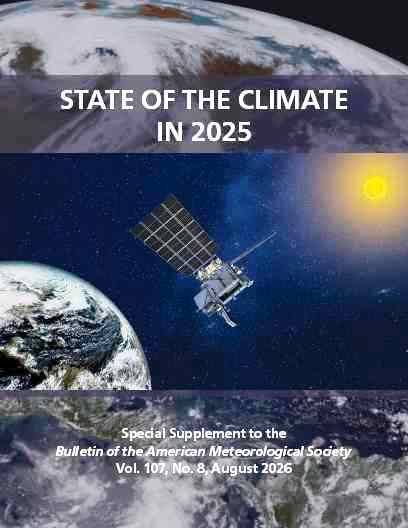
August 2026 also saw the publication of what is now known as now known as the 'State of the Climate', published in the Bulletin of the American Meteorological Society. All global surface temperature datasets in this report indicate that 2025 was among the three warmest years in the instrumental record, which spans more than 175 years. Furthermore, the 11 warmest years on record all occurred in the past 11 years. Across the globe, 2025 also marked the 38th consecutive year of land-based glacier mass loss (which can happen, as we soon had an exemplar, with catastrophic consequences), with 41% of the total glacier ice mass lost since 1976 occurring during just the last decade. Global mean sea level reached 111.2 mm above the 1993 baseline, also a new record. Europe experienced its warmest year in the record dating as far back as 1900, with a mean temperature anomaly of +1.3°C, while North America experienced its third-warmest year in its 176-year record, with a mean temperature anomaly of +1.06°C relative to 1991–2020.
Gosh, if only politicians were aware of this: they don't seem to be... (despite some professing otherwise).
|
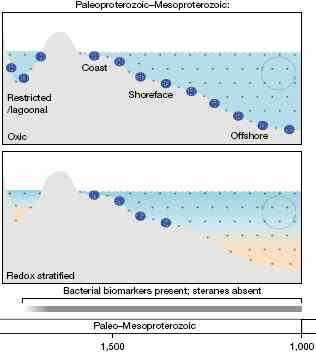 Top: Eukaryotes (large circles) only
found on the sea-floor bottom whereas
prokaryotes (small) occur throughout
the water column. Bottom: Eukaryotes
only found on oxygenated sea floors. |
Summer 2026 Some of the first true eukaryotes lived on the bottom of oxygenated shallow seas. New research published in Nature suggests that early eukaryotes were benthic aerobes: bottom-dwelling in oxygenated waters. They looked at the habitats of the oldest known fossil eukaryotes, approximately 1.75–1.4 billion years old. The fossils were only found in settings with oxygenated bottom waters. If they had been floating planktonic eukaryotes in the oxygenated surface waters then when they died they would have fallen down to lie in deeper, de-oxygenated sediments. Because no fossil eukaryotes were found in such sediments, the conclusion is that these eukaryotes were bottom dwellers before eukaryotes developed the floatation structures enabling them to live in surface waters. 1.75–1.4 billion years old was after the 'Great Oxygenation' when the Earth's atmospheric oxygen rose from a mere whiff to a couple of a percent (compared to today's roughly 21%).
|
|
|
Ok, we need to unpack this a little. The first thing to note is that the researchers were looking at 'some of the first' 'true' eukaryotes. It would be most unlikely if scientists had found fossils of the very first true eukaryotes as sampling the geological record has a happenstance element: we do not have geological record cores of everywhere and plate tectonics has destroyed a substantive part of the early Earth's crust. This uncertainty element is known as the Signor–Lipps effect: there could have been true eukaryotes earlier.
The second thing to note is 'true' eukaryotes evolved from progenitors: proto-eukaryotes if you will (see within eukaryogenesis 'First Eukaryotic Common Ancestor' FECA immediate descendants). Here there is debate as to when these first arose, and indeed whether they might perhaps, possibly have been involved in the Great Oxygenation Event: if not directly but perhaps through ecosystem function and nutrient cycling?
Notwithstanding both these caveats, this is key research for those into deep-time evolution.
The primary research is: Lechte, M. A. et al. (2026) Early fossil eukaryotes were benthic aerobes. Nature, vol. 670, p670-5.
See also recent molecular clock evidence for eukaryotic evolution below.
|
 9th-10th July 2026
Not a good mix, and as the respites between summer heatwaves (this was the third of the year so far!) is getting shorter and also as I was laid up with heat-stroke for four days last year, I have now come to the painful decision not to register for [summer] symposia.
|
Summer 2026 The 3-day Life and Planet 2026 symposia held during a record-breaking British heatwave. With temperatures in central London hitting over 35°C (and heat all over the nation) it was a genuine nightmare getting to and from the event, and at nights I was getting just three-and-a-half hours sleep and so feeling wasted during the day! Not a good mix, and as the respites between summer heatwaves (this was the third of the year so far!) is getting shorter and also as I was laid up with heat-stroke for four days last year, I have now come to the painful decision not to register for symposia, or travel to other events held between the last week in May and the end of the first week in August. Fortunately, local cybercafés and other nearby places have good air-con so I can ride out the worst of the day and work. Given that in the northern hemisphere the summer (post exams) is the field trip and symposium season, it looks like from here on in I'll be attending far fewer. Fortunately, in London (which I can get to fairly easily and can contrive other reasons to make the trip worthwhile), there are early evening science lectures over the autumn, winter and spring. As said, a painful decision and one not taken lightly as it is a major lifestyle change. So if you do invite me to something over the summer and I turn it down, do not take it personally.
|
|
|
As for Life & Planet 2026, as usual there were some interesting papers including one that looked at fossil microbial mats dating from over three billion years ago. Some of these have been sent to NASA and will be looked at by an Earth-bound duplicate of the SHERLOC analysis suite on the Mars Perseverance Rover in Jezero crater. It will be interesting to see how these compare with Perseverance's sample analysis in the autumn of 2025.
Life & Planet 2026 also saw papers whose titles had a genre inspiration including 'What if Dr. Strange is a palaeobotanist: let fossil plants travel through time and space' and 'Strangers in a Strange Land: Using super-resolution imaging to understand the traits of enigmatic early terrestrial organisms'.
|
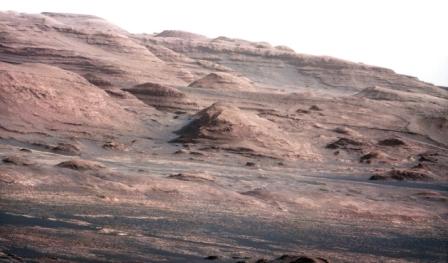
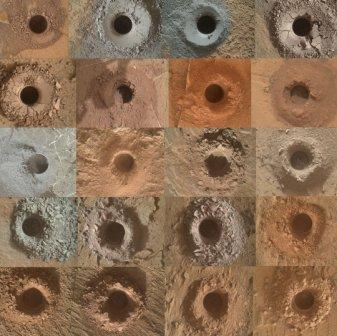 20 Curiosity drill samples from Gale Crater that were analysed for this study.
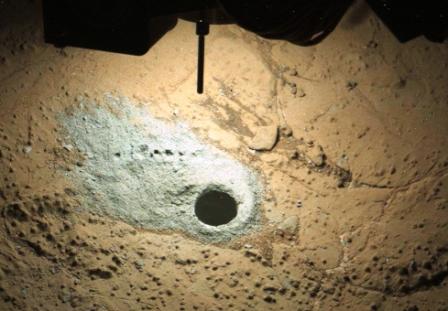 © NASA. Under its non-commercial
use terms.
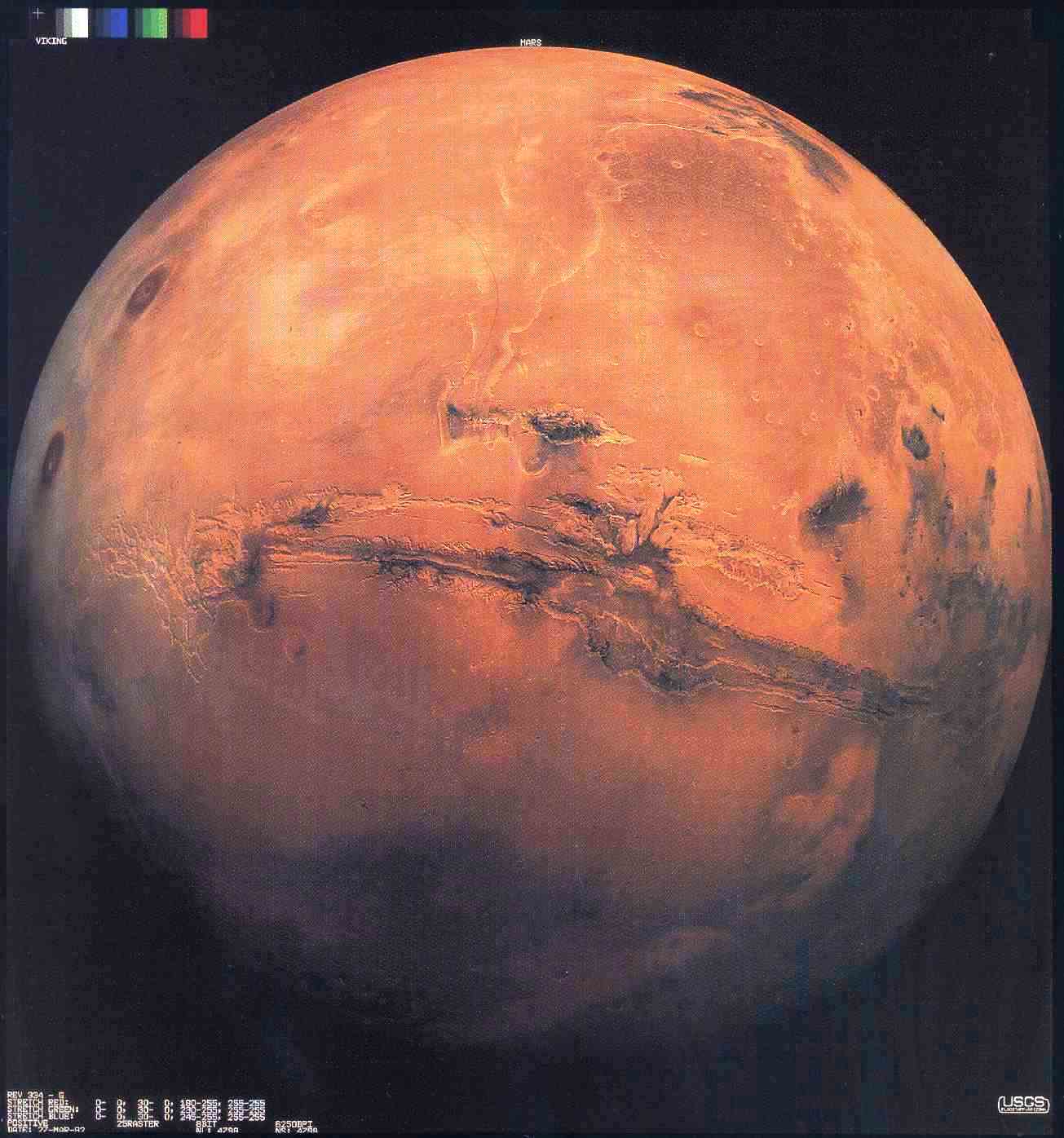 Mars by Viking. © NASA.. Non-commercial use here in the context of a review.
 |
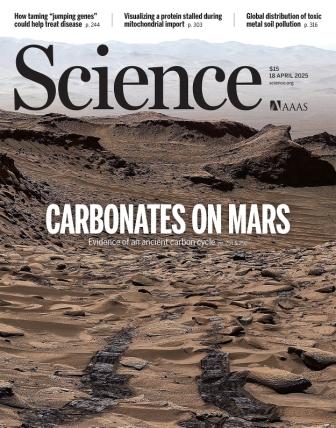
Summer 2026 The Curiosity rover has discovered a marker (indicator) of Mars' past climates. Turning to the Gale Crater and the Curiosity rover (well, it makes a change from the Jezero crater and Perseverance I covered in the autumn) and samples taken of a type of iron oxide -- haematite / Fe2O3 -- have been shown to indicate the past Martian climate. Researchers looking at the Curiosity samples, have analysed the microscopic iron oxide crystals in rocks and compared the crystallographic properties with laboratory experiments. They used Curiosity's rover’s Chemistry and Mineralogy (CheMin) instrument and used X-ray diffraction at different wavelengths to determine crystal size and structure. The shape of the crystals indicates the way/manner in which they were formed, and the presence or absence of a related mineral depends on the subsequent subsurface temperature. The authors argue that a measured transition in the crystal properties coincides with the ancient climate change.
They attribute the larger crystallites in the Gale's Murray formation to formation in warm and wet conditions that persisted for several million years. Hematite with small crystallites co-occurs with goethite (iron oxyhydroxide) in the overlying layers, consistent with colder and water-limited conditions. They suggest that warm groundwater might have remained for up to 4.7 million years in the deepest layers of Gale Crater and that during much of this time, these long-lived aquifers could have been potentially habitable.
As much past Martian climate conditions comes from modelling, this study is different in that the data comes from Martian samples, rather than from theoretical modelling.
See Szczerba et al. (2026) Hematite is a mineralogical marker of ancient climate change on Mars. Science, vol. 392, p966-971.
This builds on previous Gale, Curiosity news:
- New organic molecules detected on Mars
- Ancient Martian carbon cycle - New insight!
- Long chain carbon molecules have been discovered on Mars
This builds on previous Jezero crater, Perseverance news:
- Mysterious Martian minerals have been found by the Perseverance rover...
- Jezero crater delta geology
- Jezero crater delta features
This builds on previous Mars lander news:
- And everyone seems to be off to Mars
- My Mars contamination concerns on 150th anniversary of H. G. Wells' birth
I think we all know where this is heading...
|
|
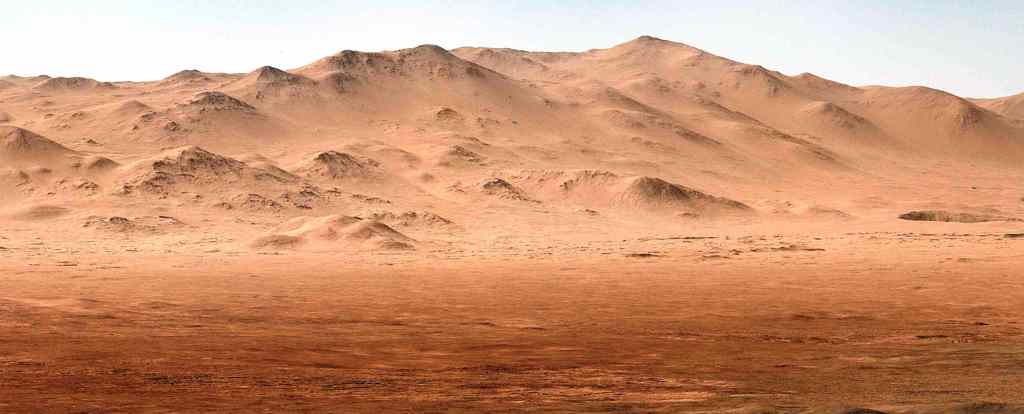 © NASA. Under its non-commercial use terms. Gale Crater panorama.
 |
|
 Jonathan, Louis Savy (SFL Director),
Stephen and Julie. |
Summer 2026 The Sci-Fi London film fest is back. This (if my counting is correct) is the 25th such fest, and we are not sure how much longer the organisers can keep these going? Big box-office franchise films are all very well (and fun) but these days each sees so many offerings that they do tend to be a tad formulaic. For novel imagination and sensawunda you really have to go for independent art house SF films. Sci-Fi London's focus is on recent art house offerings and it invariably features some UK, European and World premieres.
An example at this year's event was The Uncertainty Principle from Romania (see left). If Primer rewired your brain, this one will finish the job. In this adventure, laced with humour, three scientists stand on the brink of a quantum-mechanics breakthrough that could redefine reality itself. Tensions build as these men reckon with the discoveries they are making... Sebastian Baradau, brings a razor-sharp style of film-making to create this raw, electric masterpiece. The Uncertainty Principle is hypnotic, fearless, and shot with a gritty intensity you can’t look away from. Like the science it’s built on, the film offers no easy answers – just a transfixing puzzle that lingers long after the credits roll.
Another was the smart, emotional, and genuinely unsettling, Canadian thriller Signal One that has nods to Ex Machina and Contact.
Here, a tech billionaire, Sam Houston, recruits a brilliant computer scientist, Annika, to work at a secretive facility. There, she stumbles into a discovery that changes everything: alien intelligences are communicating all around us, right now! But when the mission shifts from listening to talking back, the protocol breaks down. The only problem... we may be far too primitive to understand what they’re saying – and with contact comes consequences, with the survival of our species suddenly very much on the line....
Film festival highlights included a pre-festival reception for SF stakeholders and fest sponsors. These last included the European Space Agency public-engagement organisation 'Space Rocks', Sci Fi Now magazine, Adobe, John Mullaney Visualisation (who provided the spaceship design for this year's logo -- see below), and Astronomy Now magazine. Another highlight was the 48 Hour Challenge whereby one weekend earlier in the year teams were given a couple of lines of dialogue and told to include a particular prop before going off to make a film at least 5-minutes long in just two days. This year's winner concerned a parcel delivery service that delivered what you needed before you knew you needed it. House holder: 'I didn't order this! Please unsubscribe me from whatever this is.' Delivery man: 'Sorry sir, you cannot unsubscribe from the future.' At first it all goes so well, until one day a delivery contains...
If you are reading this in the near-future, then do check to see if there will be another SFL fest in the offing. www.sci-fi-london.com.
|
|
|
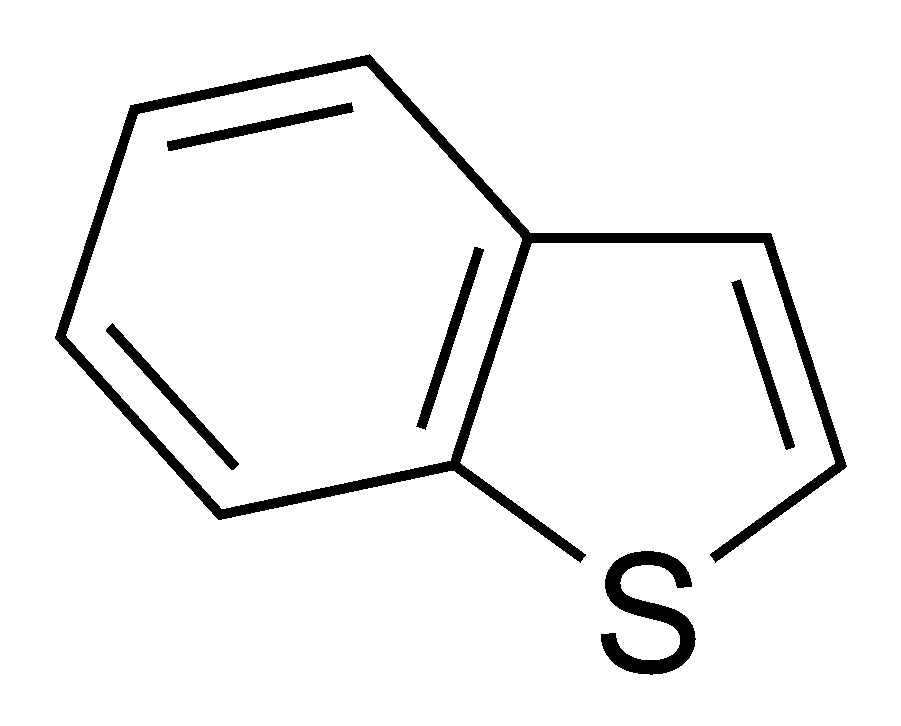 Benzothiophene
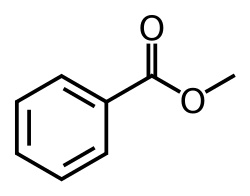 Methyl-benzoate
 |
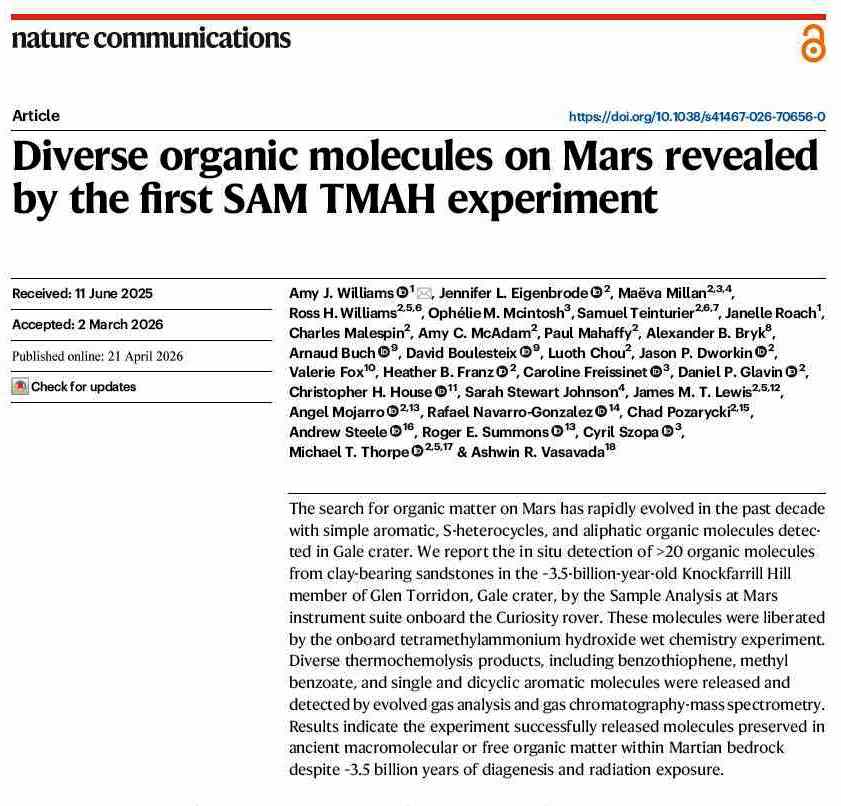
Summer 2026 New organic molecules detected on Mars. Hot on the news, of water-altered molecules detected by the Perseverance rover in Mars' Jezero crater last autumn, is fresh research from another Martian crater, the Gale crater. There the Curiosity rover has taken samples and subjected them to the Sample Analysis at Mars instrument suite onboard the rover. And the results are now in. There are benzothiophene, methyl benzoate, and single and dicyclic aromatic molecules present. The researchers, mainly US-based, do not know whether the source of these molecules comes from meteors or were they formed in situ either by life or some geological process. What they can say is that these molecules are most likely around 3.5-billion years old as that is the age of the strata from which they were taken.
The importance of this work is that it is an indication that with further development of robotic lab analysis on future Martian rovers, it is likely that some future missions will have the capability to detect biosignatures should they exist.
Primary research: Williams, A. J. et al. (2026) Diverse organic molecules on Mars revealed by the first SAM TMAH experiment. Nature Communications, vol. 17, 2748.
|
Mars by Viking. © NASA.
Non-commercial use as per NASA policy.
|
Summer 2026 A continental sediment shelf may better define Mars' primordial ocean. Two geological boundaries have previously been interpreted as two northern seas, one inside another, in the northern hemisphere. The idea is that the two seas existed at different times with one sea being smaller than the other. These seas are known as the Arabia and Deuteronilus. There have been a number of explanations for these two seas, including Martian polar wander (2007) and also Mars deformation over millions of years.
A new explanation for these two geological boundaries has now been proposed in the latest issue of Nature. The idea is simple, which is one reason why it is attractive.
Two researchers based at the Division of Geological and Planetary Sciences, California Institute of Technology, Pasadena, in the USA, now hypothesise that the two lines – that had been interpreted as the shorelines of two seas (Arabia and Deuteronilus) existing at different times – are in fact the upper and lower boundaries of a Martian continental shelf.
On Earth considerable erosion over hundred of millions of years has seen sediment eroded off the continents to create a shelf of sedimentary rock off of the continent. On Mars, they propose, things happened slightly differently. Mars' wet phase was much shorter in time and so less sediment was carried to the shore of the northern hemisphere sea causing a gentler slope rather than the steeper cut-off Earth's continental shelves have.
Their idea has a certain attraction as it only necessitates just one ocean as opposed to two existing at different times with some (unexplained) transition between one and the other. Having said that, their idea is new and I see that it has spent a little over a year in peer-review.
Primary research Zaki, A. S. & Lamb, M. P. (2026) Identifying the topographic signature of early Martian oceans. Nature, vol. 652, p878-885.
|
|
|
|
|
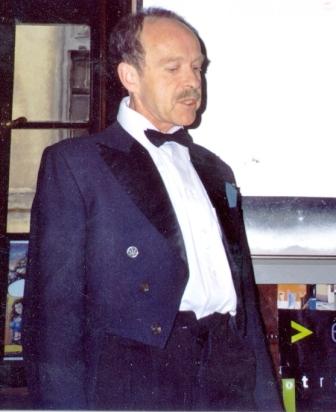
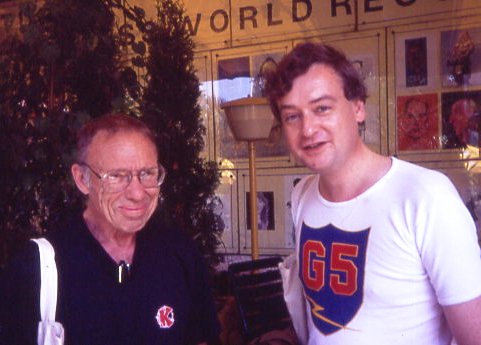
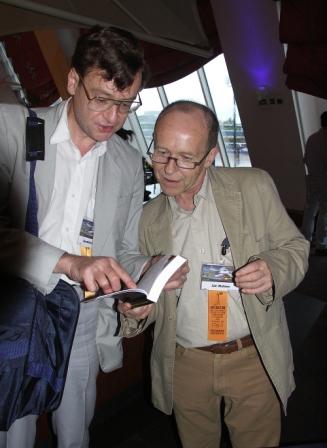
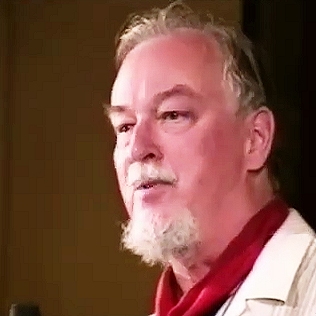
Summer 2026 Sad news in that Ian Watson has passed. Ian Watson sadly left us just a week shy of his 83rd birthday. Just a couple of weeks earlier he had sent out an all-points bulletin that he would be missing this year's British Eastercon (Britain's national SF convention): he had been a regular participant for decades. For those seeking his work, I would recommend his collection The Very Slow Time Machine (1979) the titular story of which was short-listed for a Hugo Award (I rank it as one of my all-time, top ten, time travel stories). And also his collection with Roberto Saving for a Sunny Day and Other Stories (2012) which features a story with myself (Sebastian) appearing. Though we both may well have been at Novacon 7 and 8, I first met Ian face-to-face (actually side-by side) in person at Novacon 9 (1979) in the gents loo where he sidled up to me -- as we were both paying a watery tribute to Bacchus -- informing me that he would be one of our next Guests of Honour at our next college Shoestringcon SF convention, which he duly was. I saw Ian on and off over the years, including for a week in Timisoara, at the 2nd International Week of Science & Science Fiction (part sponsored by Concatenation), where he was a Guest and at which he also appeared as the Ghost of Honour, H. G. Wells (see picture left). His last big SFnal hurrah was him being the principal organiser of the 2016 Eurocon (Barcelona): Ian at that time had retired to Spain. As I previously mentioned below, a collection of his fan writing appeared only last year in which both Concatenation and myself make an appearance. As it happened, I had only just e-mailed Ian a couple of days before his passing, but (now understandably) he never got back to me. Another good egg off into the night.
|
|
|
|
Easter 2026 Amazing Stories magazine launched 100 years ago. April 1926 saw the first edition of Amazing Stories edited by one Hugo Gernsback (after whom the Hugo Awards are named). Well, actually, though the cover was dated April, it hit the news stands in March... Its first edition stories were by H. G. Wells, Jules Verne and Edgar Allan Poe. This arguably transformed the authors from ordinary writers into science fiction writers.
The term 'science fiction' was itself used in issue two of Amazing Stories but previously used and defined in Wilson's Little Earnest Book Upon A Great Old Subject in 1851. Prior to Amazing Stories there had been science fiction magazines in Germany, but the US-based Amazing was the first to be published in the English language and as such it might be considered to mark the beginning of science fiction's modern era.
Having said that, there was the London-based The Wonderful Magazine, and Marvellous Chronicle or New Weekly Entertainer from 1793. This proclaimed to feature 'miraculous, queer, odd, strange, supernatural, whimsical, absurd stories and as such featured both what might be called science fiction as well as fantasy and fantastical horror, it was a speculative fiction magazine (such is genre nomenclature and systematic relationship) combined with Forteana. So it was not pure SF.
The first issue's contents included: 'Off on a Comet – or Hector Servadac' by Jules Verne, 'The New Accelerator' by H. G. Wells, 'The Thing From ... Outside' by George Allen England, 'The Man Who Saved the Earth' by Austin Hall, , 'The Man from the Atom' by G. Peyton Wertenbaker and 'The Facts in the Case of Mr. Valdemar' by Edgar Allan Poe.
Happy birthday.
|
|
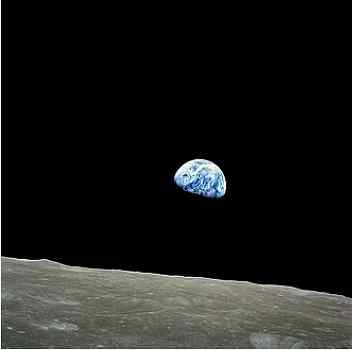 Apollo 8's Earthrise (1968)
© NASA used under its non-commercial
copyright policy.
|
Easter 2026 Artemis II bringing back memories of Apollo 8. I remember well that Christmas 1968 was framed by the Apollo 8 mission. Apollo 8 was the first time humans had seen the far side of the Moon with their own eyes: a privilege granted to Frank Borman, James Lovell Jr. and William Anders. It was the analogous mission to Artemis II. The Apollo 8 mission also gave us the Earthrise photo of the Earth that is said to have inspired the environmental movement (though personally I am less sure in my own case).
To my mind there is a certain symmetry with Apollo 8 taking place over Christmas and Artemis II over Easter... but then my initials are 'JC'.
Artemis is the Greek goddess of hunting, the wilderness, wild animals, transitions, nature, vegetation, childbirth, care of children, and chastity. She is the equivalent to the Roman goddess of Diana. Artemis was the daughter of Zeus and Leto, and twin sister of Apollo. So now -- if you did not already -- you know how the Apollo and Artemis missions are related.
Some have said that the Artemis prog- ramme is a waste of money. Well, in terms of commercially harnessing lunar resources it probably is but it is also of great value to science. In addition to all the traditional science benefits, I for one, wonder what a decent-sized radio telescope on the far side of the Moon (shielded from all that electromagnetic junk we humans spew out from Earth) would reveal to us?
Of course, some will think in cash terms, so lets do so. Artemis II's budget was an estimated US$4 billion (£3bn). Against the US GDP of US$28 trillion (£21 trillion) that represents 0.013%.
Finally, a note about the picture below which is a little bit of a cheat. It is not a picture of the full Earth (the Earth in its 'full' phase). Rather, it is a long exposure of the night side of the Earth with the Earth bathed in reflected Moonshine. For comparison see the standard exposure photo left.
|
|
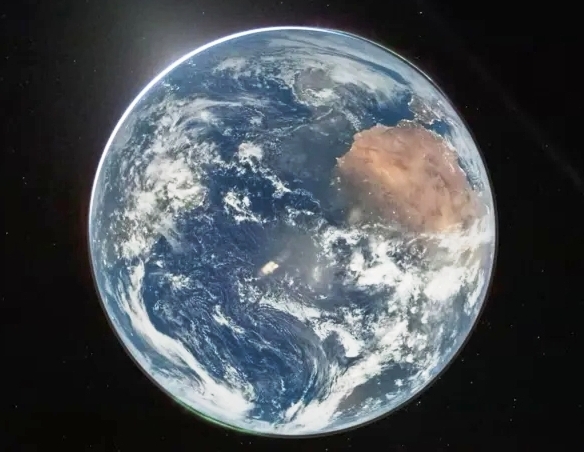 Earth from Armetis II on the craft's trip to the Moon.
© NASA (2026) used under its non-commercial copyright policy.
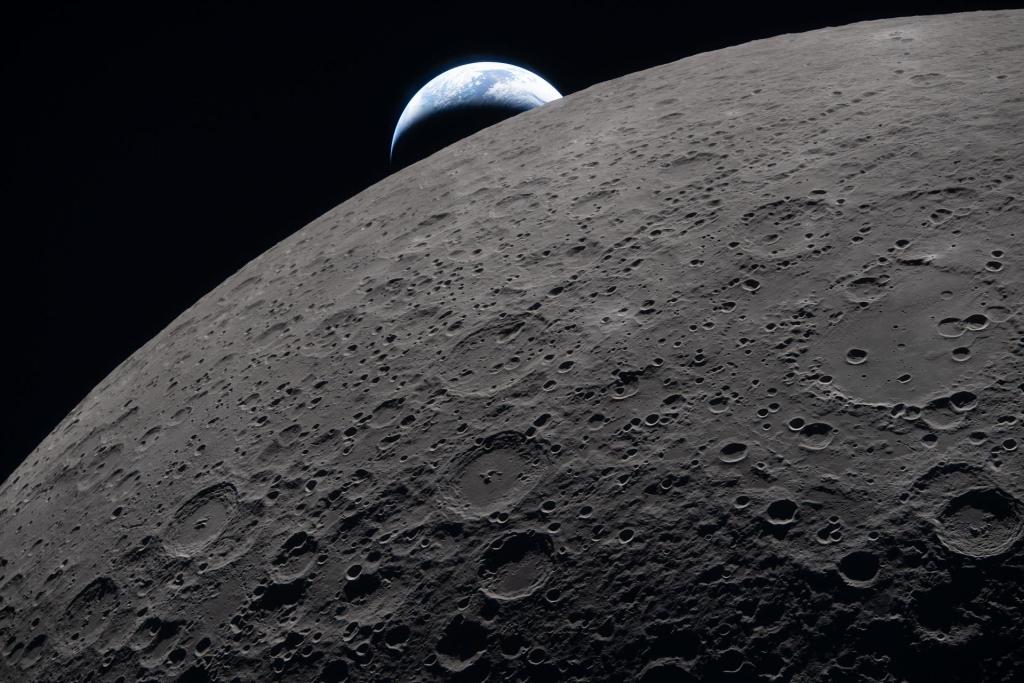 Earthrise from Artemis II behind the Moon.
© NASA (2026) used under its non-commercial copyright policy. |
|
The abbreviations used in the figure below are:
LUCA = Last Universal Common Ancestor
LACA = Last Archaeal Comon Ancestor
LBCA = Last Bacterial Common Ancestor
nFECA = nuclear memberane First Eukaryotic Common Ancestor
mFECA = mitochondrial First Eukaryotic Common Ancestor
LECA = Last Eukaryotic Common Ancestor
LPECA = Last Plastid Common Ancestor
Ga = giga years ago which is also billions of years ago
Figure reproduction used under a Creative Commons Attribution
4.0 International License and are from Kay, C. J. et al (2026) Dated gene duplications elucidate the evolutionary assembly of eukaryotes. Nature, vol. 650, p129-140
|
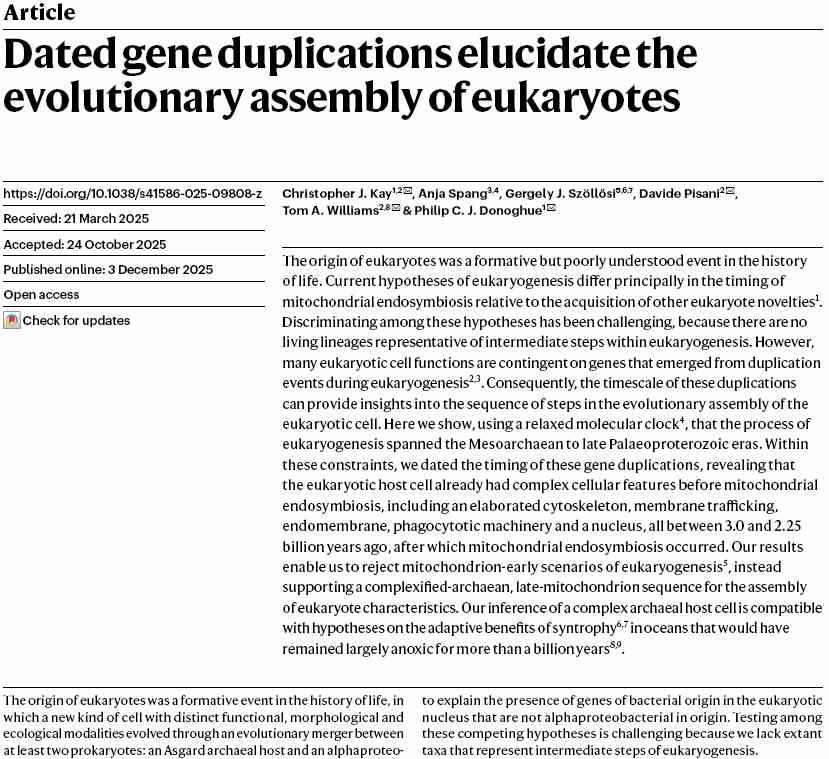
Spring 2026 When did more complex (eukaryotic) cells evolve from more simple bacteria-like (prokaryotic) cells? Early cells, Prokaryotes were simple, like Bacteria and Archaea, and later the more 'advanced' Eukaryotes evolved. But how and when did one evolve from the other?
This is one of the key questions in biology and now a new molecular clock analysis of genes for 62 proteins from 40 families of species and their duplications sheds some light on the topic. Molecular clocks are not the most reliable of methods as much depends on protein mutation rates, however assumptions can be made as to how these vary (possibly more so at times of speciation) and incorporated. Also, using many proteins and many species, helps reduce error. The British and Netherlands based researchers conclude that eukaryotes arose gradually between 3.0 and 2.25 billion years ago. It is thought that mitochondria came early in the process but this analysis puts that into doubt; instead the formation of a nuclear membrane seems to have come earlier. The other conclusion is that first life (the Last Universal Common Ancestor – LUCA) arose really early in the Earth's history around 4.43–4.52 billion years ago. This was before the hypothetical late heavy bombardment. This has implications for the possibility of life elsewhere on Earth-like planets. However corroborative research is desperately needed. (See Kay, C. J. et al (2026) Dated gene duplications elucidate the evolutionary assembly of eukaryotes. Nature, vol. 650, p129-140 and the comment article Archibald, J. M. (2026) Genomic clues to the origin of eukaryotic cells. Nature, vol. 650, p42-44.)
This paper is of relevance to my own next major work. However, this last is currently in press following a substantive time in peer review, and so I have not been able to include this paper's results. Having said that, this paper's conclusions as to the start of eukaryogenesis and subsequently the rise of the First Eukaryotic Common Ancestor (FECA) do 'broadly' chime with my own thoughts. Having said that, I am a little surprised at their estimation for LUCA (Last Universal Common Ancestor) which seems to be as early as it could possibly be in a hot Earth Hadean and I wonder if even prokaryotes could take that heat? But it does chime with my view that life got going really quickly.
This builds on much previous work including that from the journal Science I commented upon last summer.
I look forward to further research in this area with great interest.
|
|
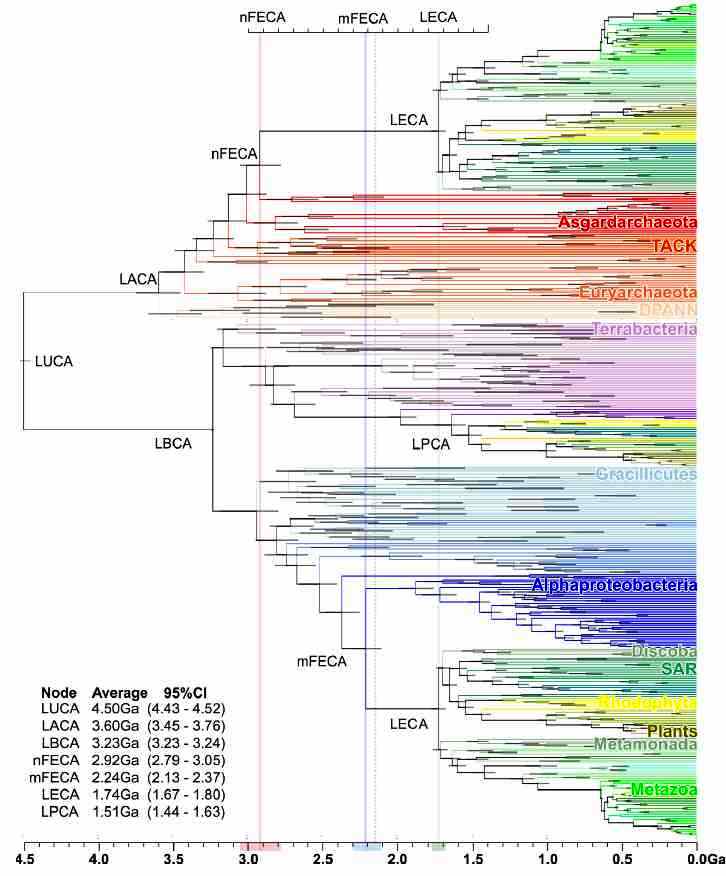 Important node (evolutionary branch) dates and their confidence intervals.
 |
|
|
Spring 2026 Global ecosystem collapse coming in a few decades! Please DON'T PANIC! For many, the end of the world is a favourite SF trope… That is, until it becomes all too real! Britain's government's DEFRA (Department of Environment, Food and Rural Affairs) has just published a report that predicts widespread collapse of ecosystems affecting global food production, disease spread and natural disasters. This in turn will result in cascading risks of ecosystem degradation that are likely to include geopolitical instability, economic insecurity, conflict, migration and increased inter-state competition for resources. All countries are exposed to the risks of ecosystem collapse within and beyond their borders. Some will be exposed sooner than others and are likely to act to secure their interests, particularly water and food security.
Regarding Britain itself, the report concludes that without significant increases in UK food system and supply chain resilience, it is unlikely the UK would be able to maintain food security if ecosystem collapse drives geopolitical competition for food…
Now, as some of those that follow me will know, a few years ago I moved away from climate change science (to deep time co-evolution of life and planet science) as I literally found it too damn depressing... and as studies have shown including here, I was not alone. Sadly, my broad academic training is in environmental science, and that continues to throw me curved balls...
To cap it all, you can imagine how my past career, representing UK biologists to policy makers and Parliamentarians, engenders faith in policitians' ability to address long-term issues... Well, at least I'm getting old: that's the really good news!
The report is DEFRA (2026) Global Biodiversity Loss, Ecosystem Collapse and National Security: A national security assessment. H. M. Government: London, Great Britain.
|
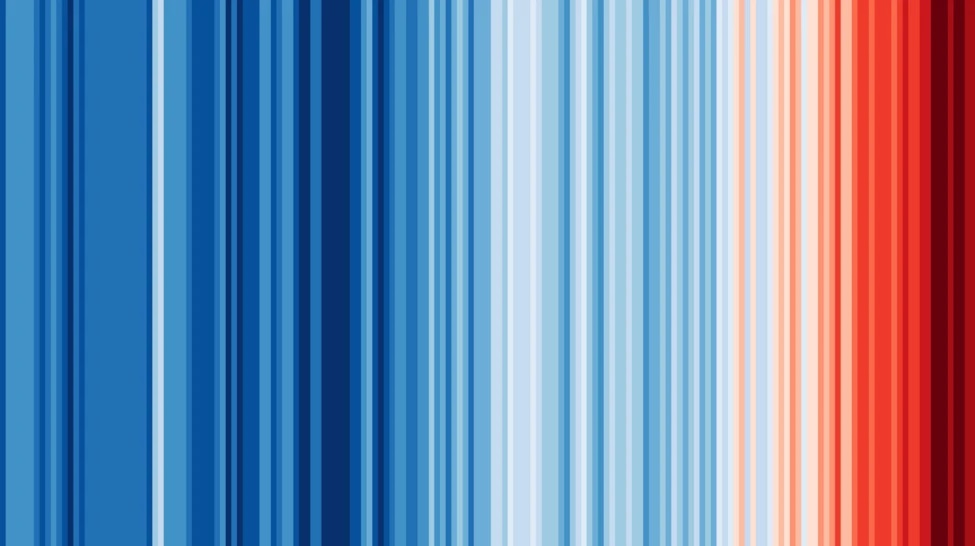 The stripes show the change in average
global temperatures since 1850
|
Spring 2026 The climate stripe graphic has been updated to include 2025. The graphic was created, originally in 2018, by Ed Hawkins of Reading University. Here, the connection with myself, other than having worked on climate change, is that my gap period before college was spent working as a technician at the National Institute for Research in Darying (NIRD) which was run under the stewardship of Reading University. I was based in Shinfield: Ed Hawkins is based in Whiteknights Park, north of Pepper Lane, which I'd cross in my final school years to (ahem) visit the Students Union.
The data used to compile the stripes comes from bodies including the Copernicus Climate Change Service, Met Office and the UN's World Meteorological Organisation. The update was made in January. I have to say, as the Earth gets even warmer, I wonder what colours they will use?
With regards to temperature, 2025 ranks as the third-warmest year on record, following the unprecedented
temperatures observed in 2023 and 2024. It was marginally cooler than 2023, while 2024 remains the warmest year on record and the first year with an average temperature clearly exceeding 1.5°C above the pre-industrial level.
|
|
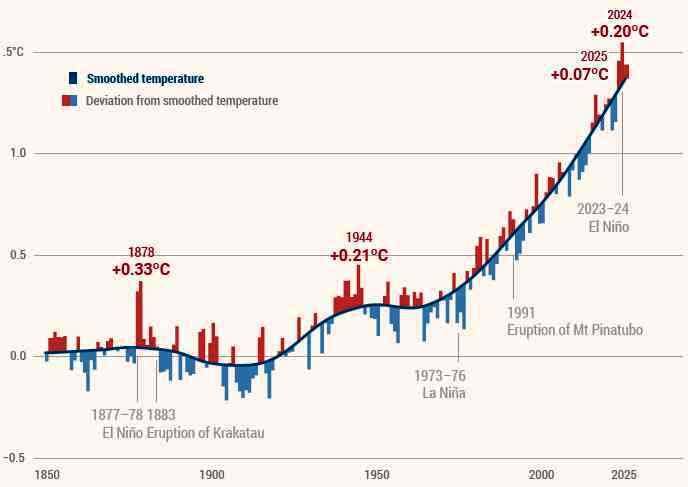 Just a few of the most important natural events affecting the global climate are highlighted.
ERA5 data. Graphic from Copernicus Climate Change Service (2026) Global Climate Highlights.
European Centre for Medium-Range Weather Forecasts: Bonn, Germany.
Used here under the Copernicus non-commercial allowance with source citation.
|
|
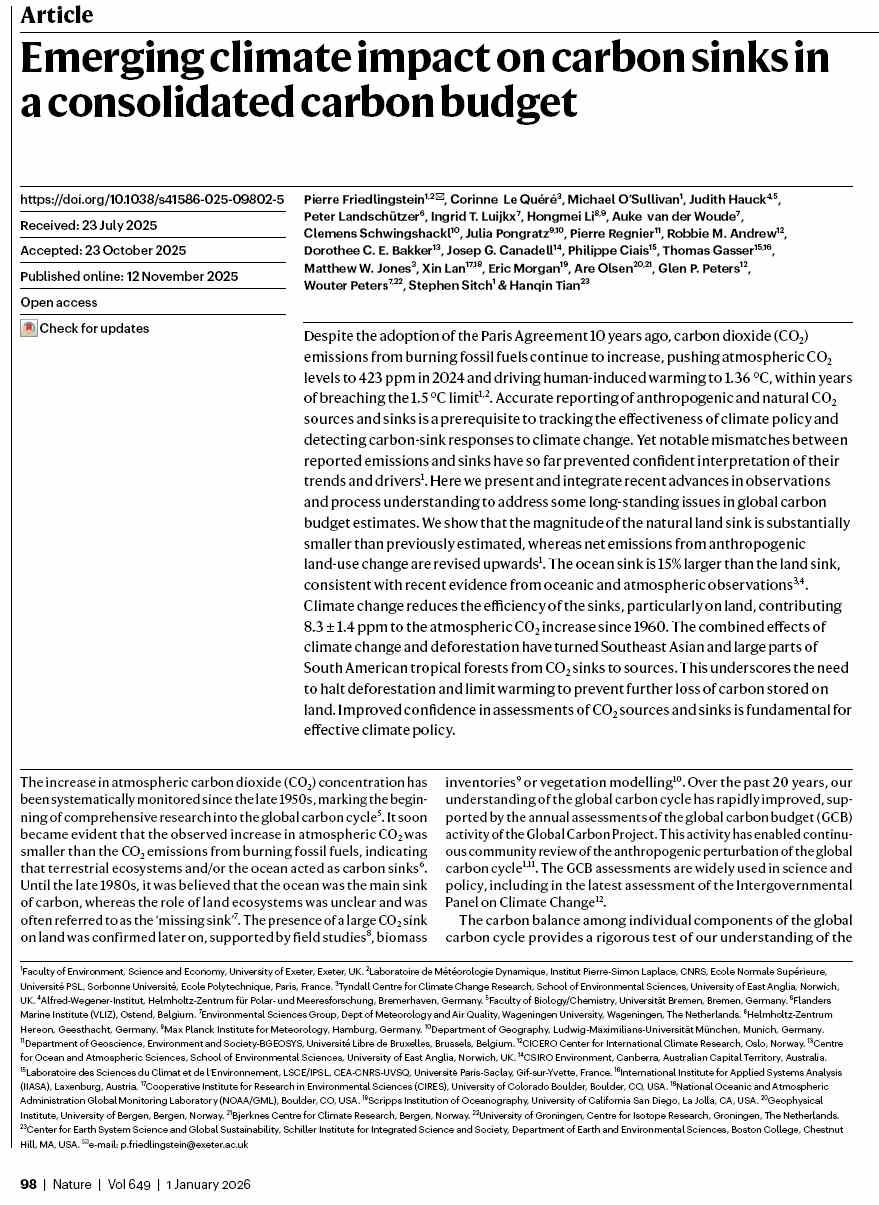
Friedlingstein, P., et al (2026) Emerging climate impact on carbon sinks in a consolidated carbon budget. Nature, vol. 649, p98-103.
|
New Year's Day 2026 The first key climate science paper of 2026. Now, the carbon cycle is intrinsically important for various reasons, not least because carbon dioxide is the major anthropogenic greenhouse gas so the amount entering and leaving the atmosphere is key to understanding how fast the planet is likely to warm. Surprisingly, possibly for many, there is a lot we do not know about the global carbon cycle. We have estimates as to the various carbon sources and sinks and the fluxes of carbon between them but these are not accurate as is evident by the mismatch between these and real-life measurements. The 1st January Nature paper is the latest attempt to refine our understanding and it does seem to take care of a number of the mismatches.
The graph that caught my eye was the researchers' estimate as to the net effect on atmospheric carbon dioxide since 1960 due to the decline in both terrestrial and ocean carbon sinks.
What it shows is that carbon sinks for a couple of decades since 1960 held but after that there was a shift – a transition – to a new state with global sinks declining resulting in a steady, extra contribution of carbon to the atmosphere. This is a signal that the Earth system is transitioning and this transitioning in turn may mean that the Earth system might be entering a new state. The past changes of the Earth's global climate state have been (strictly geologically speaking) rapid transitions. The transition over 10,000 years ago from the last glacial to the current interglacial lasted several centuries and was mirrored by a natural Earth-system feedback rise in atmospheric carbon dioxide. However, the carbon dioxide we have been adding to the atmosphere the past couple of centuries has seen its build up roughly ten times faster!
|
|
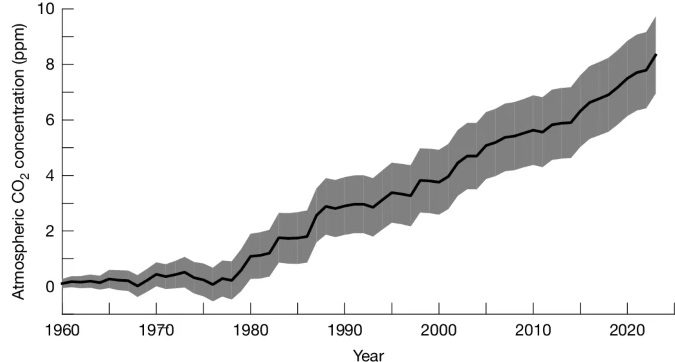 Increase in atmospheric carbon in parts per million due to decreased biosphere carbon sinks.
|
|
|
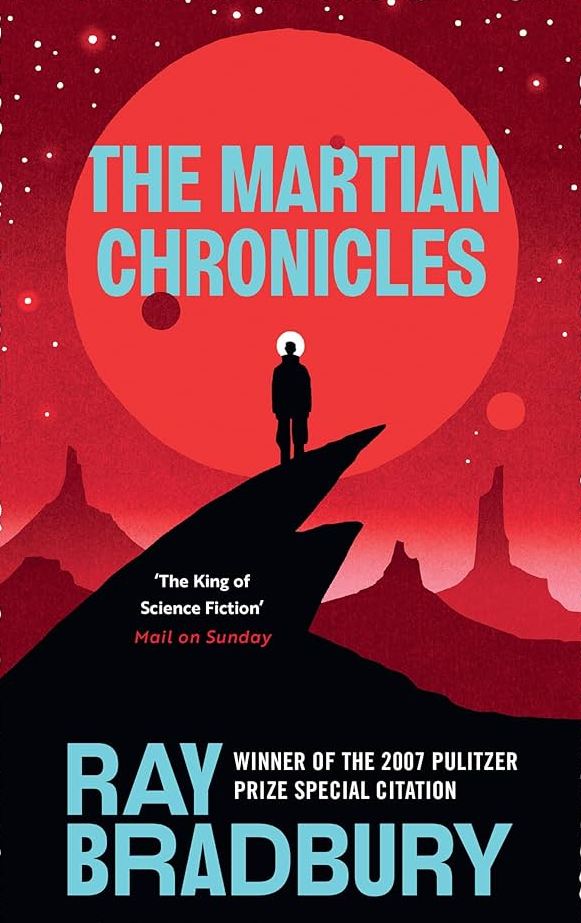
New Year's Day 2026 Welcome to 2026. This year -- 2026 -- marks the final year of The Martian Chronicles, the 1950 science fantasy collection by the wonderful 'Ray Bradbureeeey, the greatest sci-fi writer in historeee'. The final two stories in Chronicles are set in the year 2026. Today, other than possible microbes, Mars is the only planet we know of that is totally populated by robots, and if that notion isn't genre-adjacent then... Shhh... 'Something wicked this way will come..., 'Something wicked this way will come..., Something wicked this way will come......, and by 'come' I mean....
What larks for the Dark They Were, and Golden Eyed.
Talking of really enjoying great books, 2026 is also Britain's National Year of Reading. We last had one of these 18 years ago and that led to the Reading for Life campaign which, at the time, was seen as successful. However, today things in Britain are different. In a survey last year, just one in three aged 8 to 18 years said they enjoyed reading in their free time! And before our cousins the other side of the Black Atlantic get too cocky, it is a similar story in the US. Over 20 years the decline in the numbers of individuals reading for pleasure daily in the US, decreased on average by 3% per year. In terms of the total US adult population over 20 years the proportion reading for pleasure fell from over 28% of the population to around 18%.
The National Literacy Trust, in partnership with the Department for Education are the lead bodies behind the UK National Year of Reading.
Of course Britain can have all the 'Years of Reading' it wants; it is society's investment in reading that counts. Today, in Britain, one in seven primary schools (schools for those under 12 years of age) do not have a library. However, in the most deprived regions – where the need is greatest – the figure is one in four!
Finally, for those having Easter egg difficulty with the afore lyrics to Rachel's song, Ray saw the video on his 90th birthday, prior to his passing, and approved.
☺ Welcome to 2026.
|
|
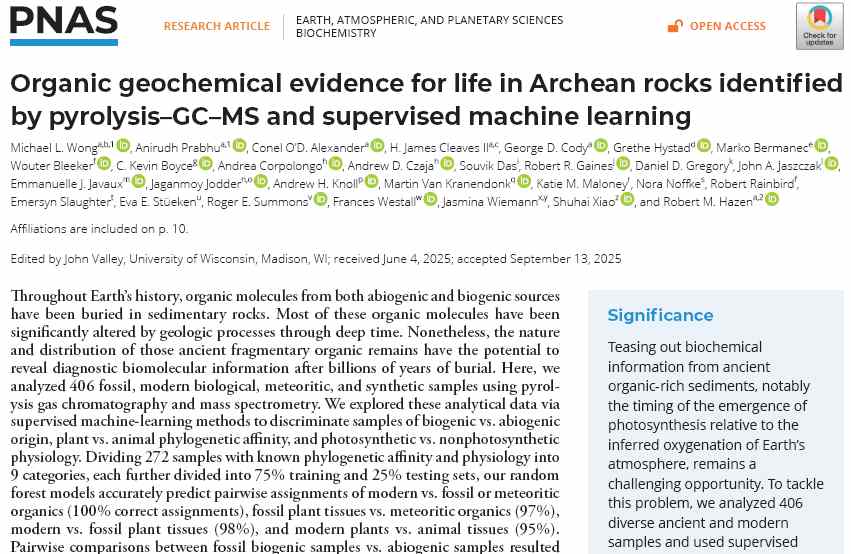
(See Wong, M. L. et al (2025) Organic geochemical evidence for life in Archean rocks identified by pyrolysis–GC–MS and supervised machine learning. PNAS, vol. 122 (47), e2514534122.)
|
Autumn 2025 Microfossils have been identified in rock 3.3 billion years old. When life began on Earth is a hotly debated topic. There is some contested evidence for early life 3.9 billion years ago (bya). These are specks of carbon depleted in the carbon-13 isotope (life discriminates against C-13). An international team of researchers has now analysed 406 diverse ancient and modern samples and used supervised machine learning to discriminate samples of biogenic (biological) vs. abiogenic (non-biological) origin. Their analysis included using machine learning tools. The results suggest that life existed 3.3 bya. Their machine-learning tool was trained dominantly on oxygenic photosynthetic organisms and future research trained on non-oxygenic photosynthesis (which is widely thought to precede oxygen-generating photosynthesis) is likely to help identify former life in even older rock, as would improved machine learning.
My personal hypothesis is that life got going really early in the Earth's history -- even earlier than 3.3bya -- but there is not much geology that dates from so long ago, so don't expect major developments soon.
|
|
|
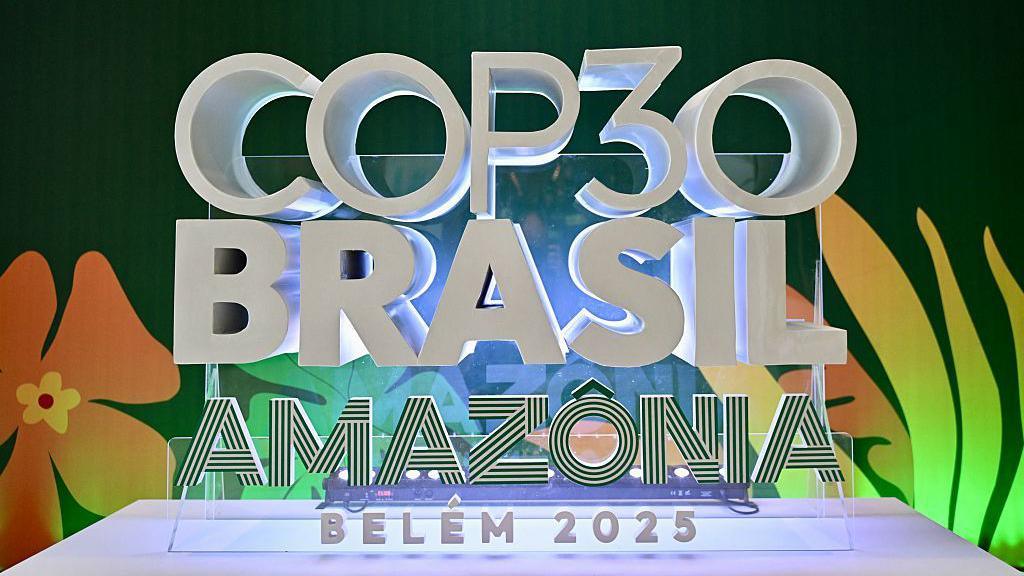
Autumn 2025 The 30th Climate COP has been held. These are annual gatherings convened under the UN Framework Convention on Climate Change that arose out of the UNCED (1992). They are quite important but there has been little progress since the 2015 Paris Accord hence Greta's 'blah, blah, blah'.
Even before this year's event started, there was a purpose-built road to the Belém, Brazil, venue causing even more Amazon deforestation. The US stayed away, China stayed quiet (that's the two biggest greenhouse emitters), Europe shot its load (guaranteed finances) before other developing countries could sign up to a road map away from fossil fuels and so there was little motivation for them to do so. (China was, though, doing brisk business selling renewable technology...) However Europe's plan for a border tax on high fossil carbon products (such as steel, fertiliser, cement, and aluminium) seems sound. Russia was being awkward and the oil-producing states blocked mentions of the need to phase out fossil fuels. The host nation Brazil's President Luiz Inácio Lula da Silva wanted a fossil fuel road map but the COP President André Corrêa do Lago felt (sadly but possibly rightly) that consensus was not achievable. And so it goes...
|
|
|
Autumn 2025 The early evolution of multicellular life has become a little clearer... Or has it? The past few years I have been working on the big sweep of biological and planetary co-evolution. Looking at the even bigger picture on the cosmological level, some have suggested that the evolution of eukaryotes as well as the evolution of multicellularity are hard (difficult) evolutionary steps providing a 'filter' that might explain the Fermi paradox – if extraterrestrial intelligences exists then why don't we see them?
Well, the way biologists currently describe the evolution of eukaryotes is that it only happened once (and currently there is much debate as to when this happened). However, this might be a little simplistic if not misleading as the process ('symbiogenesis' that led to 'endosymbiosis') occurred multiple times with various plastids including chloroplasts at least twice. So that the 'process' by which eukaryotes arose took place multiple times (even if it is said that eukaryotes arose just once) and this multiplicity of symbiogenisis suggests that the rise of eukaryotes was an 'easy' (not hard) evolutionary step.
Similarly, multicellularity took place numerous times suggesting that it too is an 'easy' evolutionary step.
|
|
|
All well and good, but it would be nice to have as much detail as possible regarding the tree of life early on around the time of the rise of true multicellularity.
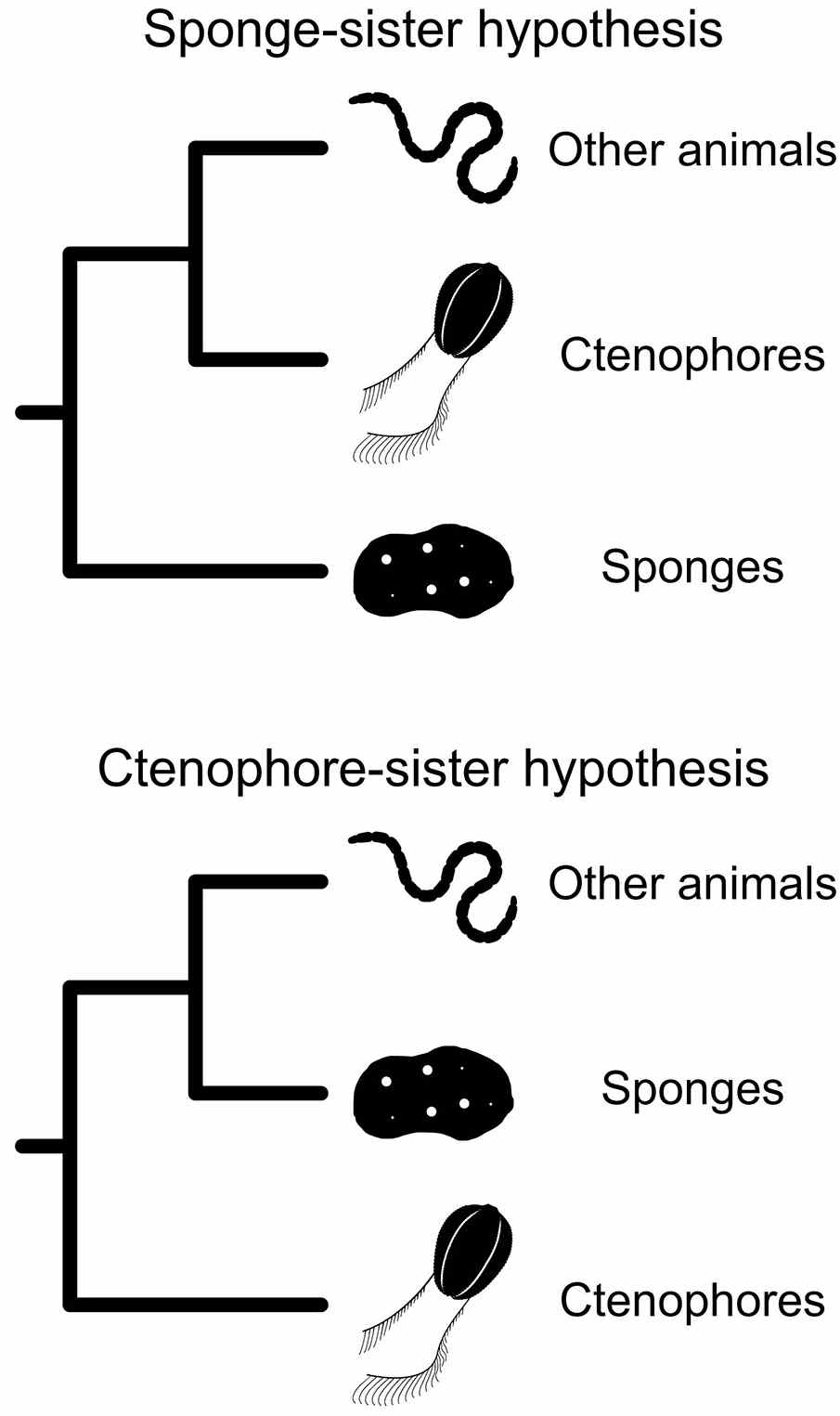
Now sponges are Porifera are technically multicellular, they are colonial and so they have no tissues or organs: they are not true multicellular organisms but have quasi-multicellularity. Then there are comb jellies (Ctenophora) which are simple multicellular species. So here is the thing. At the evolutionary base of multicellular life, are sponges an evolutionary branch that took place prior to ctenophores and animals, or did ctenophores branch off earlier with sponges being more closer to animals than ctenophores? (See the diagram left.)
There is much debate. For example, only the year before last a paper in Nature used a form of chromosomal analysis examining synteny. This paper concluded that ctenophores branched off earlier becoming the sisters to animals. (Schultz, T. D. et al (2023) Ancient gene linkages support ctenophores as sister to other animals. Nature, vol. 616, p110-117.).
The latest news is that there has been a paper published in the journal Science. (Steenwyk, J. L. & King, N. (2025) Integrative phylogenomics positions sponges at the root of the animal tree. Science, vol 390, p751-6 and the news item Mulhair, P. O. & Redmond, A. K. (2025) Sponging away phylogenomic incongruence. Science, vol 390, p673-4.) The researchers also looked at the species' genes but took a different approach: they used only genes with strong and consistent phylogenetic signal for either of two major competing ideas. They concluded that sponges branched off earlier becoming the sisters to animals.
And so the debate continues, and also it is the reason why I am omitting this detail (as biologically interesting as it is) from my next major work currently in press. You may wonder to which hypothesis I subscribe? However, in this case I am not going to nail my flag to any particular mast – I focus on other questions – but remain content to watch and see how this plays out.
Having said that, while we have got much of biological evolution's history sorted out since the Cambrian boom (or explosion) some 541 million years ago (mya) or even the Avalon explosion some 575 mya that both saw the rise of a great number of species. There is little we know before that took place before Snowball Earth II let alone previous to Snowball I in the Palaeoproterozoic prior to the Great Oxidation (around 2.2 billion years ago). We need to get a better handle on these topics if we are to meaningfully address questions relating to the possibility of complex life elsewhere.
STOP PRESS: February 2026: Retraction. Well, this paper seems to have caused a stir and the debate a little heated. The bottom line is that it was formally retracted in the 5th February 2026 edition of Science.
|
|
|
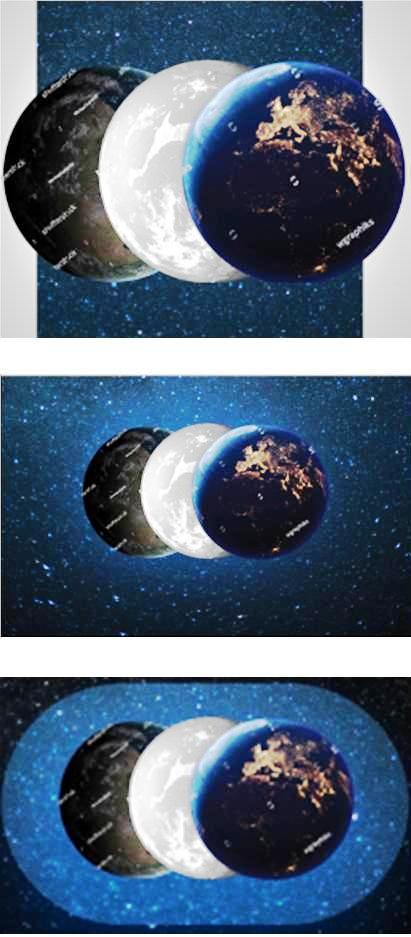
Autumn 2025 The draft artwork for my next major project is now in. There was a choice of four. Three I share (see left) but there is a fourth. Though that one includes the venture's title. (May the fourth be with you... Hang on, isn't that earlier in the year...?)
The project's implementation team managers both go with option four (not shown) but a life science friend who helped out with the project's photosynthesis and his partner went for option one (see left top). So I ran the options by over a score of friends and the SF² Concatenation team members. Option one was the clear leader, so we'll go with that. Subsequently, the pub quiz team I'm on also went with option one, so that confirms things. Many thanks to one and all who helped with the decision.
The far left planet Earth represents how it might have looked over a couple of billion years ago. The middle is one of the two Snowball (or 'slushball' if you are that way inclined) Earths. The final Earth is today's with just one species harnessing over well half terrestrial photosynthesis, imposing its fingerprint on the atmosphere and oceans, as well as creating a data-rich technosphere with computer, internet, etc. data on its way to rival biological data (equivalent bytes in genetic nucleic acid). Around some of the artworks' background stars there may be microbial life, around a few there will be complex, multicellular organisms, and possibly by just a couple, if any, there may (just 'may') be another technology-wielding species.
More news coming mid-2026.
|
|
|
Autumn 2025 The two-billion year oxygenation of our planet has been detailed by new research. Our planet did not always have an atmosphere with roughly a fifth of it oxygen. Prior to around 2.4 billion years ago, the atmosphere was devoid of oxygen (there was nothing but the faintest of traces which were quickly mopped up by the chemically reducing atmosphere). Chinese (based in Chengdu) and Australian (based in Melbourne) researchers have now obtained more isotope data from the geological record and added to that from the academic literature. Their narrative of the timing of the evolution of oxygenic photosynthesis, eukaryotes and finally multicellular life, somewhat chimes with my own. This last is currently being 'pre-edited' prior to copy-editing (hence, this paper is too late to include). We agree on when oxygenic photosynthesis arose. The big difference is that I maintain that eukaryotes arose earlier than this paper depicts as did multicellularity. (With regards to the timing of key biological evolution events, I agree more with the Science journal paper in the summer.) Having said that, the timing of biological evolution in the paper is largely there for illustrative purposes: the thrust of the paper is the isotope detail in the geological record that reflects atmospheric oxygen levels and carbon drawdown/release. It is an interesting paper that corroborates some earlier work.
|
 © NASA. Under its non-commercial
use terms
|
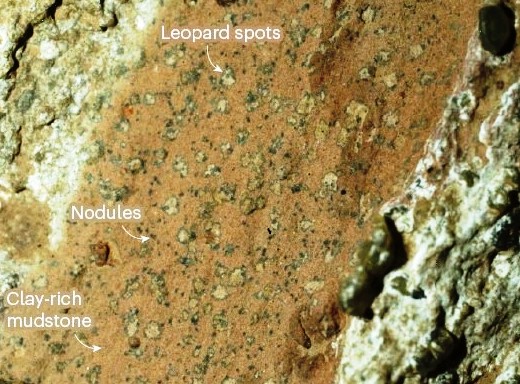
Autumn 2025 Mysterious Martian minerals have been found by the Perseverance rover... It could be signs of past life Jim...! As some of you know, I have been following the Mars Perseverance lander's goings on with: a look at the Jezero crater river delta sediments; and the finding of expected water-altered geology.
Perseverance has now left the Jezero crater as well as the Neretva Vallis river delta and has now moved up the Neretva (indeed it has currently left the Neretva). Over a year ago (such is the research and then peer-review time) it found unusual phosphate and sulphide minerals at two sites, known informally as Bright Angel and Masonic Temple, in the Neretva Vallis. Researchers conclude that the iron phosphate mineral most likely to be present in the
greenish specks is vivianite (Fe2 + 3(PO4)2 ·8H2O). There is also iron sulphide and carbon in the mix.
Now, it is possible that these minerals could have formed through basic chemistry but it is unlikely as high acidity and high temperatures (over 150°C) are required. Having said that, life could form these minerals. Alas, the limited analyses Perseverance can do cannot confirm whether life was involved in the minerals' creation. For that, the samples need to be returned to Earth for sulphur and carbon isotopic analysis. (Alas, President Trump has slashed the NASA budget, and so the sample return mission has been 'paused'.) For now, all we have are tantalising possibilities. (See the paper Hurowitz, J. A. et al. (2025) Redox-driven mineral and organic associations in Jezero Crater, Mars. Nature, vol. 645, p332-340 and the accompanying news item Bishop, J. L. & Parente, M. (2025) Martian minerals reveal ancient chemical reactions. Nature, vol. 645, p317-8.)
|
|
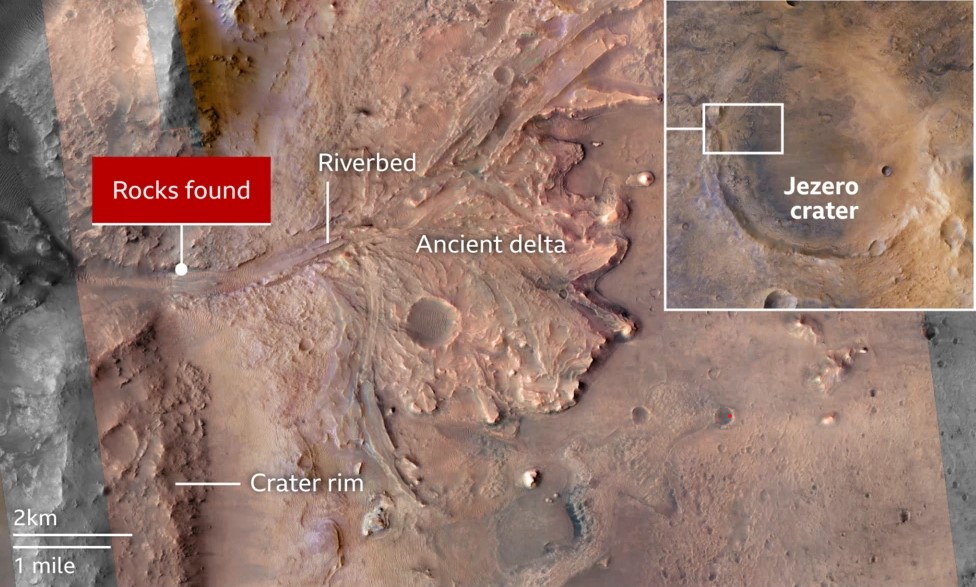 © NASA. Under its non-commercial use terms
|
|
|
Summer 2025 Monty Python stamps are out in Britain. What, Monty Python..? That's neither, I hear you cry, science nor arts-related literature! Well, true. But it is, I contend, SF/F genre-adjacent, and also its humour provides a truly sideways look at life; an approach that can often be helpful in science when wrestling with seemingly conflicting hypotheses and data... And it is, for many with a Brit sense of humour, great fun. So it is good to see the Royal Mail give a tip of the hat to the Python team.
(2025 marked the 50th anniversary of Monty Python and the Holy Grail.)
And now for something completely different...
|
|
|
Cue The Galaxy Song
Whenever life gets you down, Mrs Brown
And things seem hard or tough
And people are stupid, obnoxious or daft
And you feel that you've had quite enough
Just remember that you're standing on a planet that's evolving
And revolving at nine hundred miles an hour
It's orbiting at nineteen miles a second, so it's reckoned
A sun that is the source of all our power
The Sun and you and me and all the stars that we can see
Are moving at a million miles a day
In an outer spiral arm at forty thousand miles an hour
Of the galaxy we call the Milky Way
Our galaxy itself contains a hundred billion stars
It's a hundred thousand light years side to side
It bulges in the middle sixteen thousand light years thick
But out by us, it's just three thousand light years wide
We're thirty thousand light years from galactic central point
We go round every two hundred million years
And our galaxy is only one of millions of billions
In this amazing and expanding Universe
The Universe itself keeps on expanding and expanding
In all of the directions it can whizz
As fast as it can go – the speed of light, you know
Twelve million miles a minute and that's the fastest speed there is
So remember when you're feeling very small and insecure
How amazingly unlikely is your birth
And pray that there's intelligent life somewhere up in space
'Cause there's bμgger all down here on Earth
All together now.
|
|
|
Summer 2025 Attending the Earth System Science Group's Life & Planet 2025 3-day symposium. This is part of my Continuing Professional Development (CPD) which is analogous to Continuing Medical Education (CME) if you are into the biomedical sciences or are a clinician.
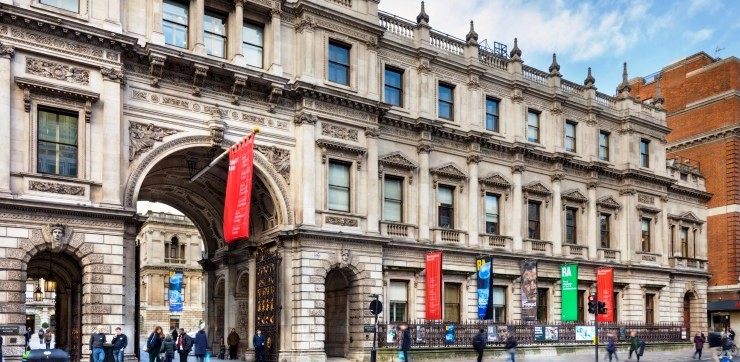
This symposium also included the Earth Systems Science Group's annual general meeting. This sought rationales for getting sponsorship from the Natural Environment Research Council (NERC). This is all well and good but I opined we had just that morning heard a paper on marine vent Archaea in the hunt for anti-microbials (to identify new antibiotics) and so why were we not also approaching the Medical Research Council (MRC) and the other Research Councils involved in astronomy and space science (EPSRC) as they are interested in things like Mars habitability? This was welcomed by the Chair and is being taken forward. My other suggestion (which may or may not be taken forward, but will be looked at) was for a joint symposium on planetary habitability with the Royal Astronomical Society especially as that body is a fellow (Burlington) Courtyard Society along with our Geological Society (to which the Earth Systems Science Group belongs).
|
|
|
The science (as always) had its moments which made it worth attending (also I wanted to see if there was anything new that blew my next project out of the water before it entered press). However, there was a real preponderance of contributions to the symposium from one academic institution associated with one of the symposium's convenors. There is one obvious explanation for this, but it might simply be that this institution is the new British foci of Earth System Science research? Nonetheless, some of the papers would have been better off presented as a poster, and some of the posters warranted a formal, verbal presentation: arguably, the decision-making here was a tad off. But, hey, this symposium was still very much worth attending for those into this area of science, and I enjoyed it. Programme archived here. (But why are today's professors all so damη young?)
|
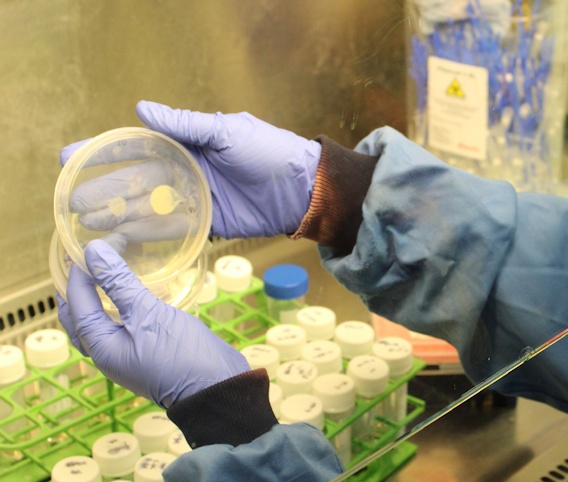 Fighting antibiotic resistance.
|
Summer 2025 It's this year's Royal Society Summer Exhibition! This is something I drop in on most years. This year saw an exhibit on fighting superbugs, which brought back memories as back in the late 1990s to early 2000s I serviced a number of Institute of Biology projects with some of its Affiliated (biological) Societies initiatives, including a two-day symposium, Parliamentary events and an introductory policy summary/briefing sheet on antibiotic resistance. (Summary here.) So, the same fight still continues today. As it happens, one of the things we looked at a quarter of a century ago (championed by Lord Soulsby) was the use of bacterial-infecting viruses (phages), and this was one of the foci of this year's Royal Society event.
This year's event seemed to cater decidedly for youngsters: there were next to no explanatory leaflets or displays at the New Scientist level. If there has been a change of brief to putative exhibitors then this is regrettable: the exhibition used to cater to both youngsters and oldies with an interest in science. Why fix something that is not broke? The visitor questionnaire also betrayed the organisers' perceptual bias as to who they think attends these events: it is not non-science interested members of the public who need their faith, trust, etc., in science bolstered... There were worrying omens that some at the RS may have lost the plot...
|
|
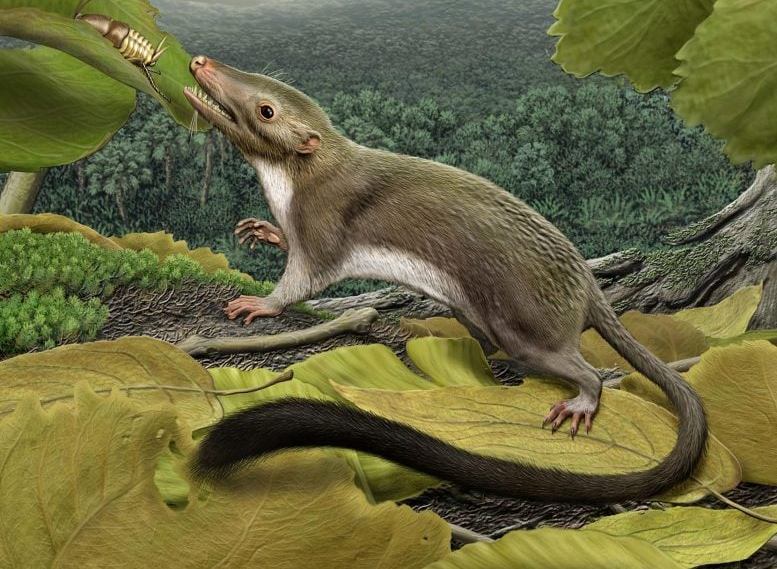 Artistic depiction from O'Leary, M. A. et al
© 2013, reproduced under non-
commercial fair-use with citation.
See O'Leary, M. A., et al (2013) The Placental Mammal Ancestor
and the Post–K-Pg Radiation of Placentals. Science, vol. 339, p262-7.
|
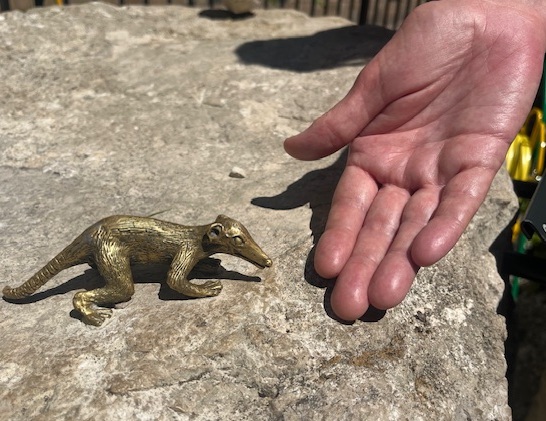
Summer 2025 We have travelled back to nearly 66 million years ago! This was just after the end-Cretaceous extinction that wiped out the dinosaurs. This was the start of the Palaeocene. Any earlier and I'd have witnessed the asteroid strikes that caused the extinction, hence needed some sort of protection (probably something a tad more robust than a stiff brolly). It would take around 100 thousand years for the small, surviving mammals to recover diversity and body sizes. Those mammals that rode out the extinction event were tiny. There is one by my hand (picture left). It is an insectivore and omnivore.
You can check this out for yourself in the front, garden area of the Natural History Museum which has a path that winds back through time.
Some small ground and water living birds, who had evolved from dinosaur-related species, also survived the extinction event. (I have never really forgiven the dinosaurs for what they did to Raquel Welch.)
This imagining of the placental ancestor is based on the work of US-based biologists published in 2013 in the journal Science whose lead author was Maureen A. O’Leary.
This work suggests that the ancestor of placental mammals (which was not a placental mammal itself) diversified a few hundred thousand years after the K/T – Cretaceous/Tertiary (or in new money, K-Pg – Cretaceous-Palaeogene) extinction event. The first members of modern placental orders began appearing 2 to 3 million years later during the Palaeocene.
|
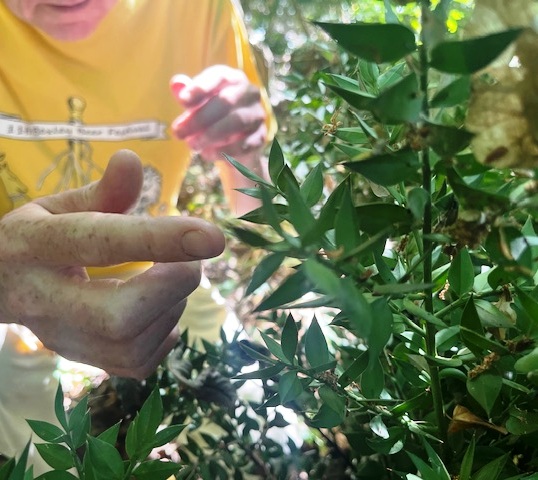 Ruscus in the wild in a nature
reserve, location to remain undisclosed.
My hand provides scale.
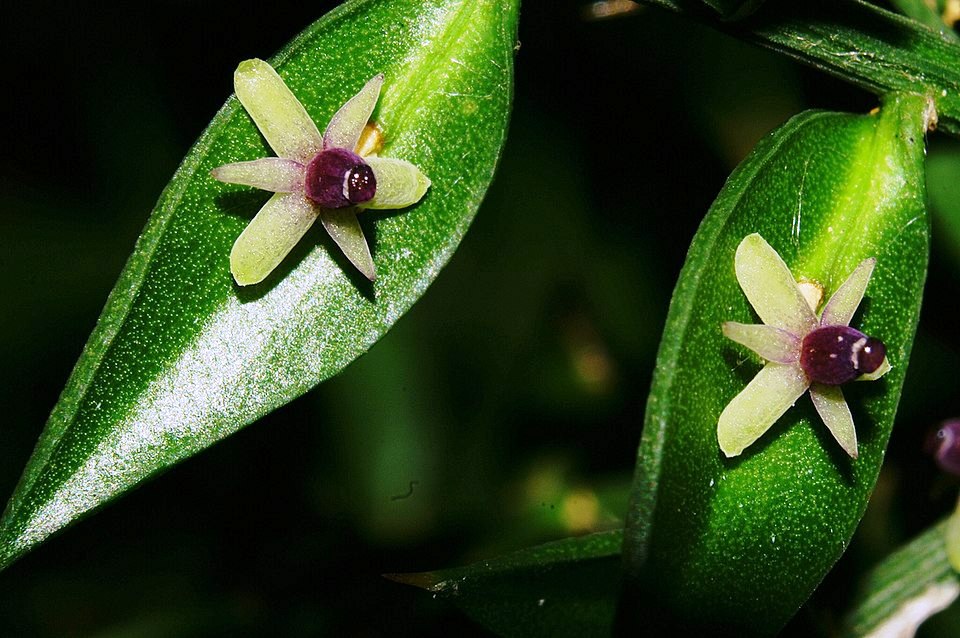
Cladodes are twigs that are flattened to look like leaves. Butcher's broom (Ruscus) looks like it has flowers growing out of its leaves, but as its 'leaves' are not leaves but are twigs, its flowers are growing off of its twigs as is commonly found in plants. It is called butcher's broom as since it has twigs for leaves it is very good at cleaning up butchers' tables and floors. Butcher's broom is also sometimes known as 'knee holly' as it commonly grows to knee height and its sharp 'leaves', rather its cladodes, can easily scratch passers-by.
|
Summer 2025 Timeo Danaos et dona ferentes... Beware Greeks bearing gifts! Though welcome friends with pressies! This last being the Celt-Anglo alternate... A long-standing friend used to live near SF² Concatenation's former mission control and so we met up to re-visit old haunts of 30 years ago. Now, my compatriot back in the day looked after a fairly local nature reserve (nowadays he is part of a team for a National Park). That local nature reserve had some old-ish woodland that had Butcher's Broom or Knee Holly (Ruscus aculeatus). This was a species I regularly referred to when, too many years ago, giving one of my exotic science talks – the one on exobiology – to schools, local learned society meets, and SF conventions, etc., as Ruscus neatly demonstrates the biological adage of shape or form following function: some alien species may well look similar to aspects of life on Earth but still be very different as though shape can reflect function, form may be different. Ruscus aculeatus provides one such example.
The thing about Ruscus is that its leaves aren't. That is to say, its leaves look like leaves but they are not: they are flattened twigs packed with chlorophyll! Their leaves are what are called phylloclades or cladodes. 'Phylloclade' comes from the Greek phyllo, leaf, and klados, branch. Actually, I prefer 'cladodes' lest there be confusion with Phyllocladus, a genus of conifer, and so perhaps their 'cladodes' are best referred to as 'phylloclades', and Ruscus' as 'cladodes'. I hope that that clears that up: biology can be kind of messy but then that's part of the quirky joy.
So, when it comes to exobiology, shape-form-and-function should still frequently hold, as should a number of conventional biological concepts like ' ecosystem function', 'trophic level', 'primary production' and much else, as it does on Earth; only in aspects of an alien planet's 'world system' (analogous to the 'Earth system'), and a heck of a lot of the biological detail, will there be major differences.
Anyway, when my long-standing compatriot turned up with a plant – yes, the very Ruscus aculeatus – there was joy unbounded. The only question is whether this woodland species, that likes poor soil, will thrive in the shadiest spot in the garden I could find (a garden that is sunny and little organic matter removed so it has accumulated). Will it flourish in an environment that is decidedly alien to its natural preferences?
So, on with the field experiment. If needs be and things don't look good, I am up for creating a micro-environment, a special niche for it in the garden...
|
|
|
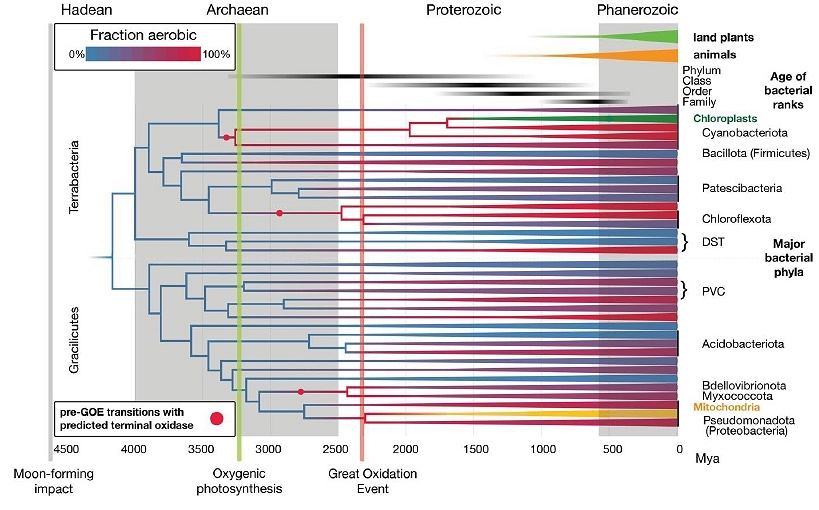
Summer 2025 Eukaryotes evolved before the Great Oxidation Event (GOE)! The journal Nature carries the study (in an issue whose cover purely coincidentally has something of an SFnal riff with cyborgs – see left) on the origin of eukaryotes. Now, my next big project is in its final stages and is in press. It is a look at deep-time evolution of life and the Earth system as well as what may be in store for us in the future). The deep-time history of the Earth is a somewhat controversial area of study as there is much debate as to what happened when? One such question is when did eukaryotes evolve? Everyone agrees that cyanobacteria evolved before the GOE of around 2.2 billion years ago (bya) as they were capable of oxygen-generating photosynthesis (oxygenic photosynthesis – OP). However, there is a big question as to whether eukaryotes evolved before or after the GOE. If the latter, then it was cyanobacteria that did all the work oxygenating the planet, transforming the Earth's atmosphere from next to no free oxygen to one with one or two percent oxygen around 2.2 bya. If it was the former, could OP eukaryotes have played a part?
Now, in this debate I fall on the side of the former group and feel that eukaryotes evolved before the GOE and that OP eukaryotes could well have contributed to the GOE.
Meanwhile, let's take a brief step back.
Two and a half months ago, at the summer's start, I noted another study in the journal Science (see below) that suggested that oxygenic photosynthesis evolved 3.25 bya. That study looked at molecular clocks and this new study looked at 223 new Asgard archaeal genomes. This chimes with my view that oxygenic photosynthesis arose before 3.0 bya even if you have to be wary of molecular clock evidence as – among other things – calibrating them is not easy.
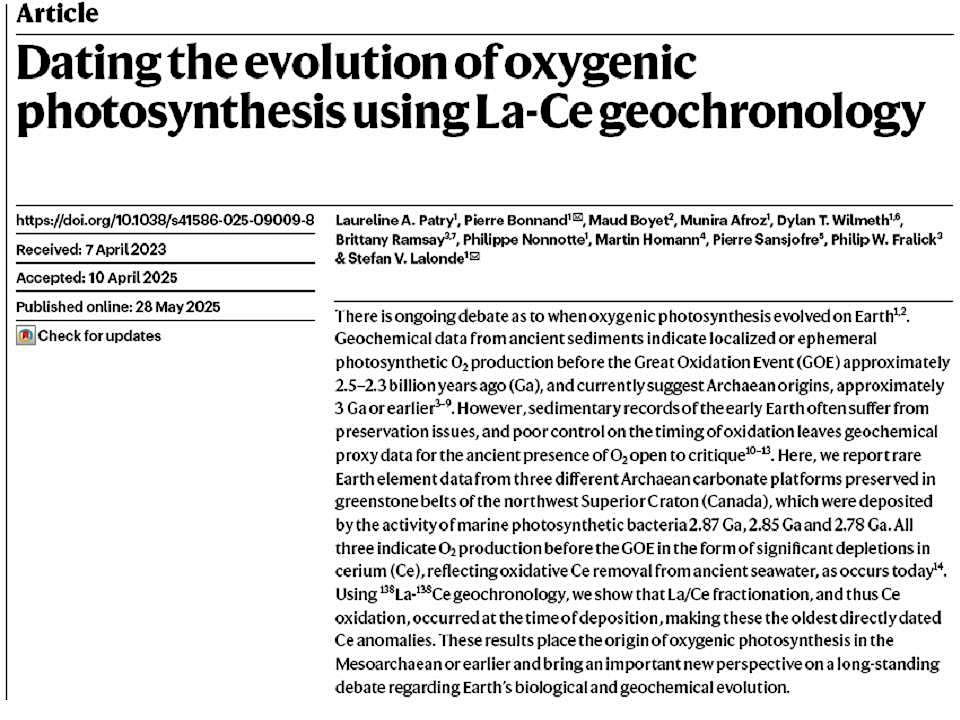
Then in May there was a paper in Nature (Patry, L. A. et al. (2025)), that did not use genomes or molecular clocks, but hard evidence from geological strata using lanthanum (La) /cerium (Ce) isotopes that showed that free oxygen was at least locally being produced as early as 2.87 bya – this is also before the GOE some time around 2.2 billion years ago (bya) (within the period 2.4 to 2.06 bya). No really big surprises there, but even if there were local effects of free oxygen then, oxygenic photosynthesis must have evolved even earlier still but any oxygen released was either used by the cyanobacterium itself or quickly absorbed by the highly reducing (oxygen free) environment of that time: it never made any significant impact on the local environment and La/Ce isotopes in carbonates.
All well and good, so oxygenic photosynthesis arose before the GOE, and there is some evidence to support my view that it evolved before three billion years ago. However, did oxygenic eukaryotes contribute to the GOE? I am less sure of this but my suspicion is that they did.
This new study (Zhang, J. et al. (2025) Deep origin of eukaryotes outside Heimdallarchaeia within Asgardarchaeota. Nature, vol. 642, pp990-998) looked at 223 genomes of Asgard archaea. The researchers used what is called a relaxed molecular clock model they conclude that the Heimdallarchaeia – the sister of eukaryotes – diverged 3.12 - 2.26 bya, that is to say eukaryotes arose around then... This was before the GOE!
So now we have three, recent key studies this summer that shed at least some light on the mechanisms as to how how the Earth began to be transformed from its biosphere being devoid of free oxygen to one where there was 1-2% free oxygen in the atmosphere with the GOE.
Bear in mind that all this does not mean (molecular clocks are hard to calibrate with certainty) that OP (oxygenic photosynthesis) eukaryotes evolved before the GOE hence contributed to it (as I contend), but as OP exists in cyanobacteria which were around well before eukaryotes, there was at least time (hence opportunity) for their being there for eukaryogenesis into eukaryotes. So, it is not impossible that OP eukaryotes helped with the initial oxygenation of the Earth... (I may well be wrong and some will disagree but, either way, science will out in the end and this Zhang, J. et al paper helps.)
Alas my own forthcoming work will not include these three studies but, as they chime with the deep-time co-evolution of life and planet narrative I have developed, it bodes well for my own work. That they all slot in so well to the deep-time narrative I am to present means that it is unlikely that my own work will be out of date when published early in 2026.
|
|
|
Summer 2025 Ancient Martian carbon cycle - New insight! The journal Science has another interesting paper (just two weeks on from the previous post below on a deep-time planet system: this time it is Mars and not the Earth system). For those that follow this site – if, that is, any do – then you will know that I have been keeping an eye on the Curiosity rover in Mars' Gale crater as well as the Perseverance rover in Mars' Jezero crater. This time it is more news of the Curiosity rover in Gale crater.
Researchers have now discovered iron carbonate (siderite) in samples remotely analysed (aboard the Curiosity rover) which was invisible in previous orbital observations. (This is another reason why roving landers are a vital adjunct to orbital observation.) Along with the siderite were highly water-soluble salts. This last is not surprising as Siderite forms from atmospheric carbon dioxide dissolved in water in a sedimentary environment.
Assuming siderite is elsewhere beneath similar rocks overlying the Gale siderite (note the assumption), then from orbital observations (similar overlying strata can be seen from orbit even if the underlying strata cannot) then the researchers suggest that the amount of carbonate would have formed from an atmospheric carbon dioxide reservoir providing an ancient additional carbon dioxide pressure of 2.6 to 36 millibars. (This compares with the today total Martian atmospheric pressure in Mars' low lands of 11.55 mbar.)
|
|
|
Why is this important? Well, for three reasons. First, this is more evidence (if more evidence be needed) that Mars was once (billions of years ago) wet with an active hydrological cycle. Second, that with is new reservoir of formerly atmospherically-sequestered carbon, this is more evidence (if more be needed and it is because we still need a much better quantitative handle) that the ancient Mars had a much thicker atmosphere. (And of course we know, because Mars no longer has a magnetic field protecting its atmosphere from Solar wind ablation and because Mars has a weaker-than-Earth gravity, that it is less capable than Earth of holding on to an atmosphere, Mars' atmosphere today is much thinner than is used to be billions of years ago.) Finally third, if Mars was wetter with an active hydrological cycle and, with a thicker atmosphere warmer than today, then billions of years ago it was more conducive to the rise of life back then than today. This in turn means that life may have once existed on Mars and even, having risen, be still with us today within near surface strata. Some might even be so close to the surface that oxygen generating photosynthesis species (probably/possibly vaguely analogous to Earth's cyanobacteria). (Remember, seasonal trace oxygen has been detected by Curiosity on Mars.) As ever, more new science will be illuminating and welcome.
|
|
|
Summer 2025 Royal mail celebrates Narnia. Those that know me know that I am not a big fan of fantasy, at least not compared to SF, but I do recognise its societal value and its cultural heritage. As a pre-teen child, I enjoyed C. S. Lewis' 'Narnia' books, though soon after found the Christian riffs a tad wearing. Still, they do form a landmark in the history of British, children's speculative fiction.
One set of eight stamps is based on the original book illustrations by Pauline Baynes (beige background), and a second set features eight new illustrations by artist Keith Robinson, reimagining key moments in the series from Lucy Pevensie’s first glimpse of Narnia to the epic finale of The Last Battle. The Lion, the Witch and the Wardrobe was published in 1950, 75 years ago.
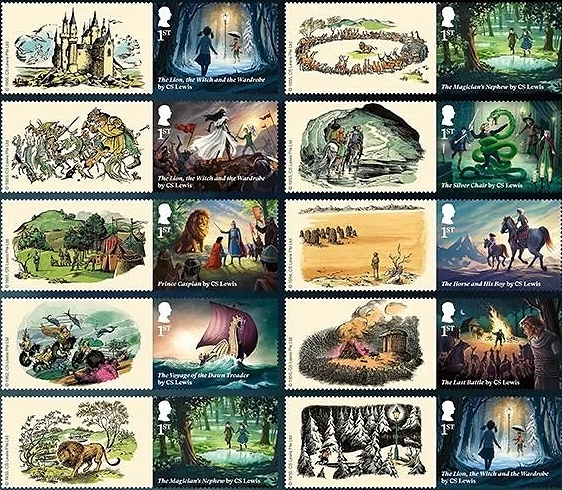 British Narnia postage stamps. Some first class! (Literally.)
|
|
|
Summer 2025 Deep-time evolution - New insight! The journal Science has an interesting paper on deep-time evolution (interesting but it still needs to be considered with a little caution) that alas came out after my next big project (which is related to deep-time evolution) had its academic cut off. (One can't keep updating a manuscript indefinitely: there has to be a cut-off point and the work has now come out of two-years of peer review and is entering pre-publication.)
The researchers looked at the genomes of over 1,000 species of prokaryote and also genes from
mitochondria and chloroplasts from diverse eukaryotes. Genes change with time and this can be used to create a sort of molecular clock to date when key evolutionary developments took place. One has to be careful as molecular changes with time are not constant but using many species' genomes can help, as can robust calibration. Here, the authors of this research have an interesting approach to calibration linking it to the great oxidation event.
Interesting for me is that their conclusions as to when the key events in evolution – oxygenic photosynthesis, rise of eukaryotes, and even when life arose – largely chime with my own. I contemplate that life arose really early, possibly soon after the Late Heavy Bombardment (and maybe even before?) and that oxygenic photosynthesis was established by three billion years ago which means it must have first arisen earlier. This new work suggests that oxygenic photosynthesis evolved 3.25 billion years ago way before the great oxidation event. This fits with my own thinking that oxygenic photosynthesis was established by three billion years ago. The new work also suggests a very early rise of life. No argument from me here either, other than it was unlikely to be widespread due to the early Earth's warm (hot?) oceans.
The one area of possible significant divergence from my own thoughts comes with the rise of eukaryotes which I opine has having took place just a little earlier than this paper suggests. But, hey, you can't have everything. Besides, on this scale a couple of hundred million years two-and-a-half billion years ago is not entirely unacceptable, hence my use of the word 'possible'.
|
|
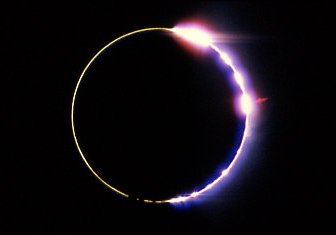 The 1999 full eclipse as seen from
the patio of a hotel bar/restaurant in
Timisoara. Note the Bailey's beads as
the Sun shines through Lunar valleys...
|
Summer 2025 We have a partial eclipse of the Sun! OK, so it is not a full eclipse, but I really enjoyed the full one back in 1999 in a very hot Timisoara having taken part in a Romanian TV presentation on the same, in the company of old friends, some new acquaintances and author Bob Sheckley who subsequently immortalised Roberto Quaglia and myself, suitably disguised, in the 2003 short tale 'The Refuge Elsewhere', Fantasy & Science Fiction, May edition, p137-160. Though that is literally another story... And that was 1999 a couple of months before 13th September and the Moon being blown out of Earth's orbit... But naughtily, you sidetrack me and I digress...
Meanwhile, back at the plot (not to mention 2025) and here in Brit-Cit we have had a partial eclipse of the Sun. A few friends are into amateur astronomy. Mark P. decided to go old school and use a homemade pin-hole camera, whereas Terry M. and Ian M. (no relation) went the whole Patrick using Seestar 50 and Seestar 30 respectively.
If you missed it, don't worry. There will be another next year on 12th August. Where we are, some 90.78% of Sun's surface will be covered by the Moon. However many of our friends down in London will see 91.4% obscured, at 7.11pm and 7.13pm respectively.
|
 Mark P. went old school with
a homemade pinhole camera. |
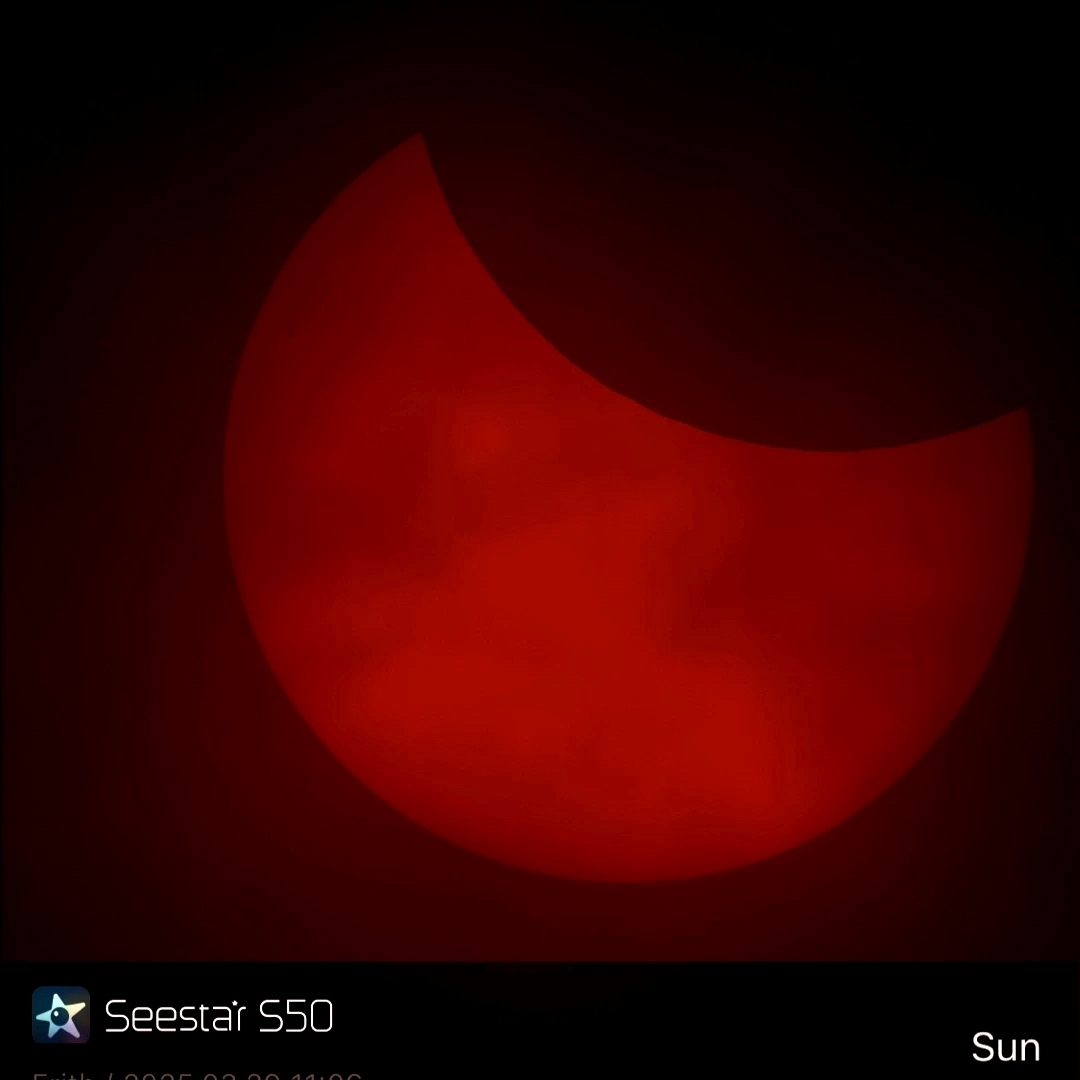 Terry M. went the full Patrick.
 |
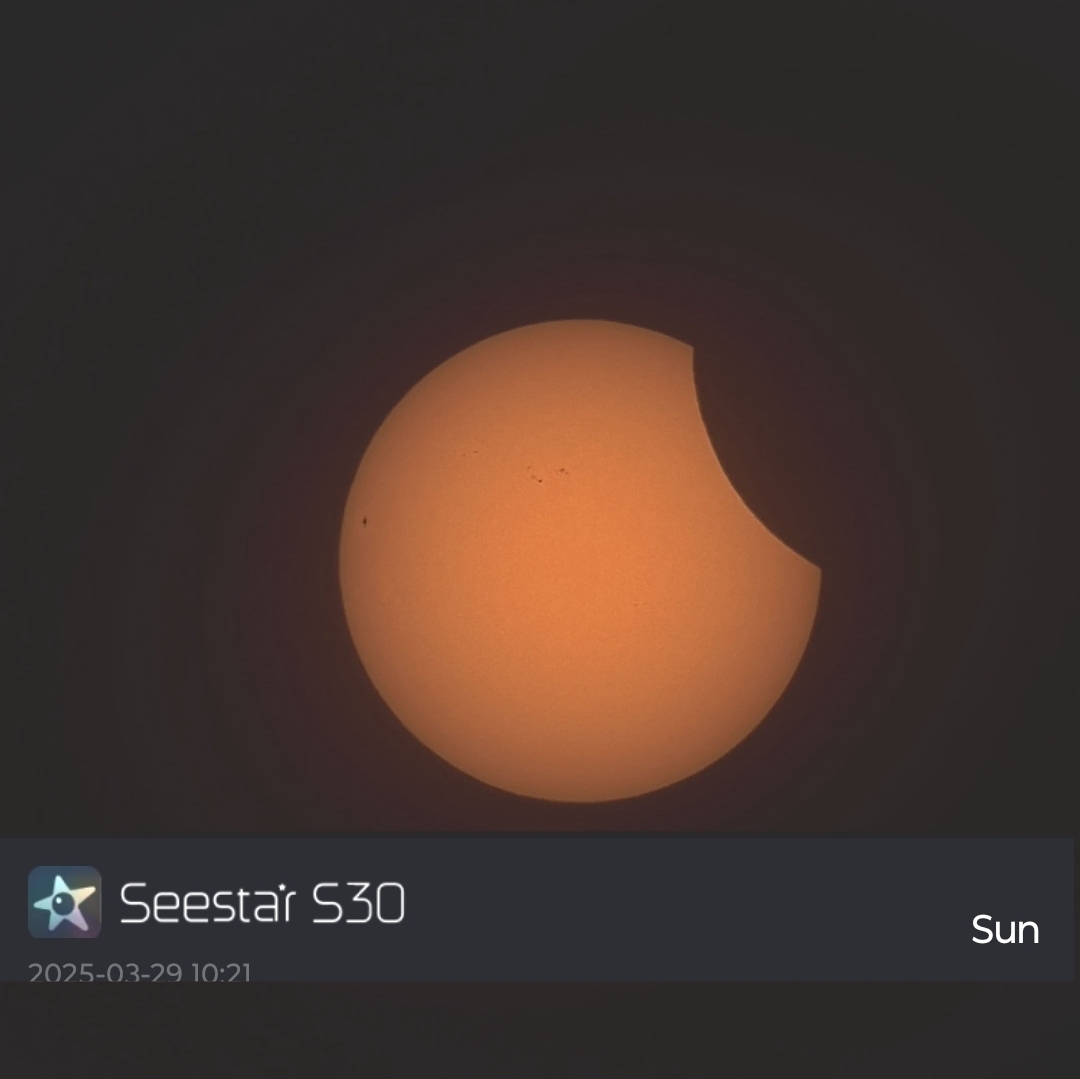 And Ian did the full Patrick too.
 |
|
|
Summer 2025 Royal mail celebrates British mythology. Those that know me know that I am not a big fan of fantasy, at least not compared to SF, but I do recognise its societal value and its cultural heritage. So it's good to see that the Royal mail does too... These new stamps are designed by the London-based artist Adam Simpson and include: the Loch Ness Monster, Cornish piskies, Beowulf &Grendel, Blodeuwedd of Welsh mythology, Irish heroic figure Fionn mac Cumhaill, the spectral hound of East Anglia, Black Shuck, selkies and a grindylow. What's not to like?
 British mythological creatures postage stamps. All first class! (Literally.)
|
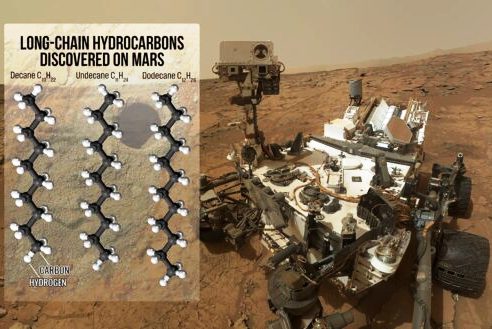 © NASA. Under its non-commercial
use terms
© NASA. Under its non-commercial
use terms
Site regulars, should such exist,
may recall that I am also following
Curiosity's successor, Perseverance which is in Jezero crater whose rocks reveal that the crater was once a lake.
|
Summer 2025 Long chain carbon molecules have been discovered on Mars! NASA's Curiosity rover in Gale Crater. Since landing in 2012, Curiosity has travelled more than 13 miles (21 kilometres) in Gale. It previously has detected molecules similar to those that make up kerogen on Earth. On Earth, kerogen is formed from the decay and burial of living organic matter, but it can also be formed non-biologically. The latest discovery actually comes from a sample drilled in 2013 and was analysed by Curiosity's Sample Analysis on Mars (SAM) instrument allowing there to be a preliminary announcement in 2015 that there were long-chain organic molecules present.
A fresh look at the data, and comparisons with a twin rover to Curiosity on Earth, but kept in Martian conditions, now lead the researchers to believe that the alkanes decane (C10H22), undecane (C11H24) and dodecane (C12H26) – that have 10, 11, and 12 carbon atoms respectively – are present.
What is the importance of this discovery? Well, assuming it is correct, we still cannot tell if this carbon originally came from life? (For that, a more detailed analysis, than that can be performed by the rover, would be required.) However, what this result does show is that such molecules, that could be indicative of life (biosignatures), can survive for billions of years: the strata is three billion years old. This means that if there was now-extinct life on Mars then its biosignatures could, both theoretically and practicably, be detectable today. Of course, it could be that there are is still microbial life still present on Mars: we just don't know. These are exciting times.
Primary research: Freissinet, C., et al. (2025) Long-chain alkanes preserved in a Martian mudstone. Proc. Natl. Acad. Sci., vol. 122 (13) e2420580122.
Review item: Voosen, P. (2025) Mars rover detects
long-chain carbon molecules. Science, vol. 387, p1,337-1,338.
|
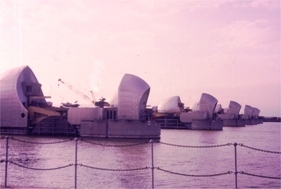 Thames barrier
 |
Spring equinox 2025 Ground breaking research teases future sea-level rise. Research just published reconstructs past sea-level rise after the end of the last glacial maximum (LGM) and reveals two pulses of peak rise around 10,000 and 8,000 years ago respectively.
The paper teases both with what it does say and, more importantly, what it does not!
|
|
|
But before I get on to that, the paper reminded me of my contribution to a sea-level rise workshop, appropriately held by the Thames Barrier, back in the 1990s. Other contributors, seemed happy to blindly regurgitate the then published IPCC Scientific Assessments. I say blindly because none mentioned the (understandable) assumptions behind the IPCC's sea-level rise scenarios (which included no additional greenhouse emissions after 2100 and it openly admitted that it took no account whatsoever of climate and Earth system feedbacks... the IPCC itself warns to be aware of 'surprises'). The other workshop contributors were happy to quote the IPCC headlines but were oblivious of the IPCC small print. (Oh dear... Welcome to my world.)
Conversely, my own presentation looked at field research on palaeo sea-level rise that suggested that past sea-level rise after the LGM but a little before the study period of this latest research (and not the IPCC's interesting but assumption-loaded models). And I was roundly turned on by my fellow workshop contributors... Until, that is, an elderly gentlemen quietly spoke up saying: 'Well, it is good to see someone present hard data...'. It was a senior former science adviser. Had he not been there, that workshop would have come to a very different and (in my view) incorrect conclusion.
|
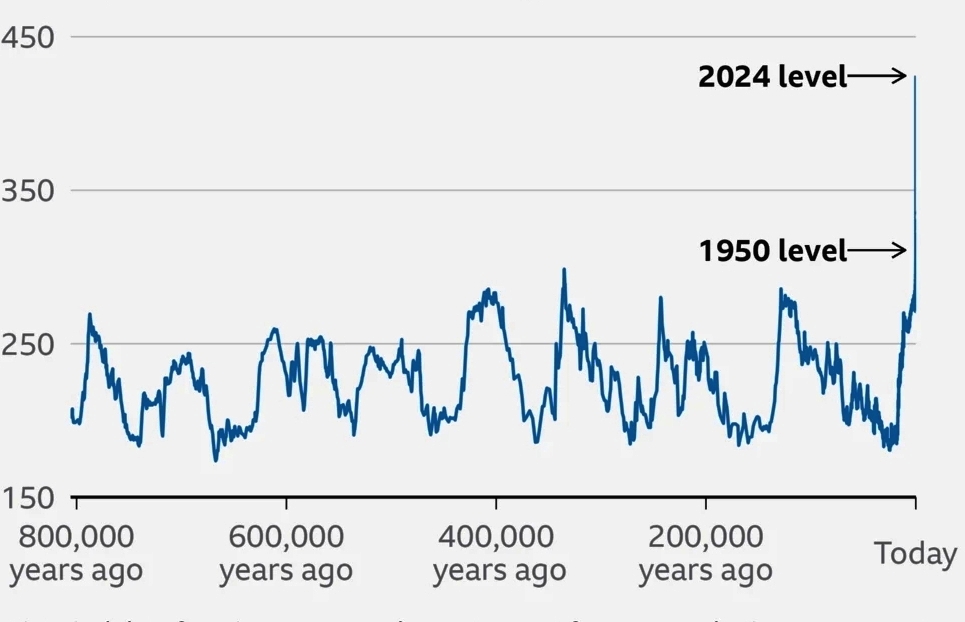 Atmospheric carbon dioxide.
Today increasing greenhouse forcing from carbon dioxide is an order of magnitude greater than in the transition after the LGM. Note the recent steepness of the above curve... Shhh, it's ever-so vertical and long.
|
So, back to this new research. While the research suggests that the past (thousands of years ago) rate of sea level rise is broadly comparable with those of the latest IPCC future scenarios (which is interesting), it remains silent on pointing out that the rate of current warming is more than an order of magnitude greater than that that took place after the LGM! Nor does it mention the IPCC sea-level rise assumptions... The other thing to bear in mind regarding this new research is that we need to beware of the Jerry Pournelle, 'It rained on [planet] Mongo' trap: what happened at one place (here in the N Sea off the Netherlands) may be just due to circumstances at that location and not a global change (in bad science fiction there are worlds with the same planetary conditions all over...). So we really need to see if research elsewhere comes up with the same pattern of sea level rise change.
|
|
This might not seem obvious at first, but other factors define local sea-level change such as the height of the land. After the glacial ice sheet melted off Northern Europe (Fennoscandia), free of the sheet's weight, the land rose (isostacy). The researchers behind this paper have attempted to take this into account, but the exact local degree of this effect needs checking.
Those of us in the know, and who have an eye for the climate science detail, can join the dots. Alas, that does not help politicians who actually have to plan for climate change adaptation, who don't know of the detail and who are prey to those who (as per Dunning Kruger) think they know the science... And so it goes.
|
|
|
Spring 2025 SF² Concatenation and myself name-checked in Watto's Wisdom. For those into British science fiction of the latter half of the 20th century, Ian Watson needs no introduction. Watto’s Wisdom: Zine & Con Writing by Ian Watson, compiled by Dave Langford. While most of the contents will be mainly appreciated by British SF fans, there is much in there for a more broader readership. This includes a substantive piece on working with Stanley Kubrick on what would eventually be Steven Speilberg's film A.I. that was based on a short story by Brian Aldiss...
(A brief aside: the article mentions Aldiss' grudge against Ian, something that one long-weekend I was thrust between over the European SF Society's 1999 Eurocon. That year's German organisers had enthusiastically invited eight authors as Guests of Honour including – not known to each other at the time of invitation acceptance – both Ian and Brian. And so it was that when I arrived in Dortmund, Harry Harrison took me aside and explained the situation... And so it was that over the long-weekend Harry kept Brian out of Ian's way while I kept Ian out of Harry's... And, of course, it was Harry's book Make Room, Make Room and its film Soylent Green that was the final prompt for my deciding to read environmental science at college. Anyway, you can read all about Ian's work with Kubrick inspired by Brian in Watto’s Wisdom.)
In addition to the Concatenation name-check, the book contains a fictional account of the 2006 Eurocon in Kyiv portrayed as a gathering of the European Poetry Association and a thinly disguised version of Roberto Quaglia (as Ricardo Evangelisti) and myself (Sebastian Dugdale), and yes, I foolishly had a pickpocket get my wallet from out of my jacket and no, I got my currency issues all sorted on the morning of the next day after arrival. Other characters in this story were: Peter Michaleczky (as Attila), Imants Belogrivs (as Imants) and Kurt Batey was the 'amiable American'. (Permission sought, of course, and given by these kind souls for my mentioning them here.) To my knowledge, this is the third time (so far) this story has appeared in print.
Other Watto's Wisdom contents of interest to SF book reader include two tributes to John Brunner: one is obvious and the other is titled 'A Truly Generous Chap'. Sadly, I saw John the day before he passed at the annual World SF Convention (Worldcon) which in 1995 was making a rare visit to Britain. John and I were walking past each other going the opposite way on either sides of the Scottish Exhibition and Conference Centre's wide, main concourse. We waved to each other before we continued in our quest to meet our resepective overseas friends who only infrequently make it this side of the Pond, or North Sea. (Conversely, John and I would meet a few times a year in addition to phone conversations: he used to ring me at work...) John had a stroke early in the morning of the next day and passed shortly after.
Also in the Watto's Wisdom mix is an introduction to Europe's largest SF bookshop (Gigamesh in Barcelona since you asked), run by Alejo Cuervo
(“Alex Crow”). It is also sprinkled with interesting oddities such as a look at Andrew Uffindell's book Napoleon’s Chicken Marengo: Creating the Myth of the Emperor’s Favourite Dish (2011) uncovering Napoleon's propaganda which included the creation of Chicken Marengo...
This is a delightful collection which should tickle most British SF fans as well as readers of Ian Watson's fiction both at home and abroad.
Watto’s Wisdom: Zine & Con Writing by Ian Watson compiled by David Langford, Ansible Editions, trdpbk, ISBN 978-1-916-50832-3.
|
 Make it fAIr, newspaper campaign wrap.
|
Winter 2025 Protecting creatives from unsolicited Artificial Intelligence (AI) training mass campaign. Something I have never before seen, a campaign wrap around UK newspapers across the political spectrum: from The Sun to The Mirror and that's the nationals: some local papers are in on this too as I found out as a semi-regular visitor to Cambridge (see picture left). A couple of years ago it was brought to my attention that both Concatenation Science-Com and SF² Concatenation had been data scraped for AI training without our permission. But it is not just us, creatives from writers to musicians are up in arms, and that includes journalists.
The UK Government's policy is just plain daft on a number of levels in addition to that of stealing of the creative professionals' intellectual property (as if the moral argument for that alone was not palpably obvious). At the moment a good number (most?) of those training AIs are just indiscriminately hoovering up as much as they can from the internet, and that includes the rubbish as well as the good stuff. This is an excellent way to facilitate AI hallucination! By ensuring that creatives are paid and that AI trainers have to request permission and 'opt in' to allow a creator's property to be used for training, trainers will have to think carefully as to what material they use to train AIs. Furthermore, the Government's proposed system requires creatives to actively 'opt out' of training which is just a plain obsfuscation palliative: how are creators to know who and when AI trainers are scraping their data?
The Make It Fair newspaper campaign is organised by the News Media Association (NMA) and backed by the Society of Editors (SOE).
If the Government gets its way, let's hope that there is an all-party joint Lords and Commons Science, Innovation & Technology Select Committees enquiry into this issue. That the current UK government is meant to be socially aware (as opposed to the current opposition who are traditionally against regulation) makes this all the more disturbing.
Baroness Beeban Kidron, who has been lobbying in the House of Lords against the Government's proposals, reportedly puts the value of UK creatives' intellectual property at £126bn-a-year (US$1.54bn)! (Bookseller, 21st February, 2025.)
Stop Press (March 2025): The Atlantic magazine has an article with a free online AI training search tool for those who are registered (give them their e-mail) for content. You can enter an author's name (or yours) and see if their works (or yours) have been used for AI training.
See also Society of Authors guidance.
|
 Global Climate Highlights 2024, Copernicus Climate Change Service.
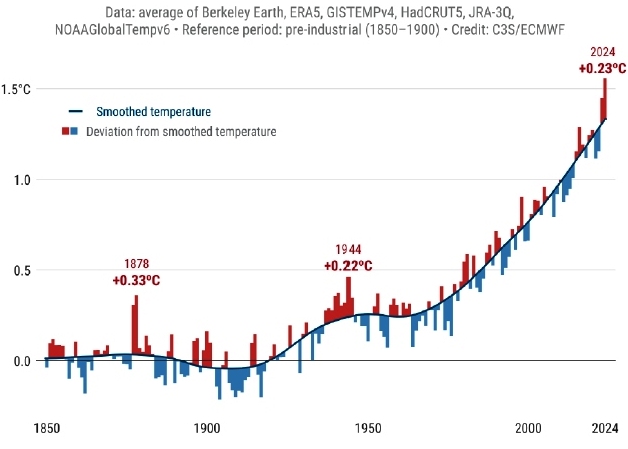 Fig. 13, Global Climate Highlights 2024,
Copernicus Climate Change Service.
Difference in global-average temperature
(°C) from the 1850–1900 level,
© Copernicus, 2025, used here
in the context of a news review.
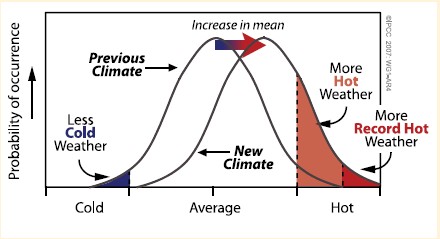 © IPCC 2007. The probability of extreme events increases disproportionally with warming.
This is from the IPCC AR4 Technical Summary for Working Group I.
© IPCC 2007. The probability of extreme events increases disproportionally with warming.
This is from the IPCC AR4 Technical Summary for Working Group I.
This graph relates to extreme hot weather events but it is equally applicable to extreme rainfall events in maritime climate zones and,
seemingly paradoxically, drought events in arid climate zones.
A small shift in the distribution (a small amount of overall warming) results in a large increase in extreme events at one end of the distribution.
This was made plain to governments by the UN's IPCC in 2007, so there
really is no excuse.
See also the sections beginning pages: 330, 355 and 358 in
Climate Change: Biological & Human Aspects, 2013.
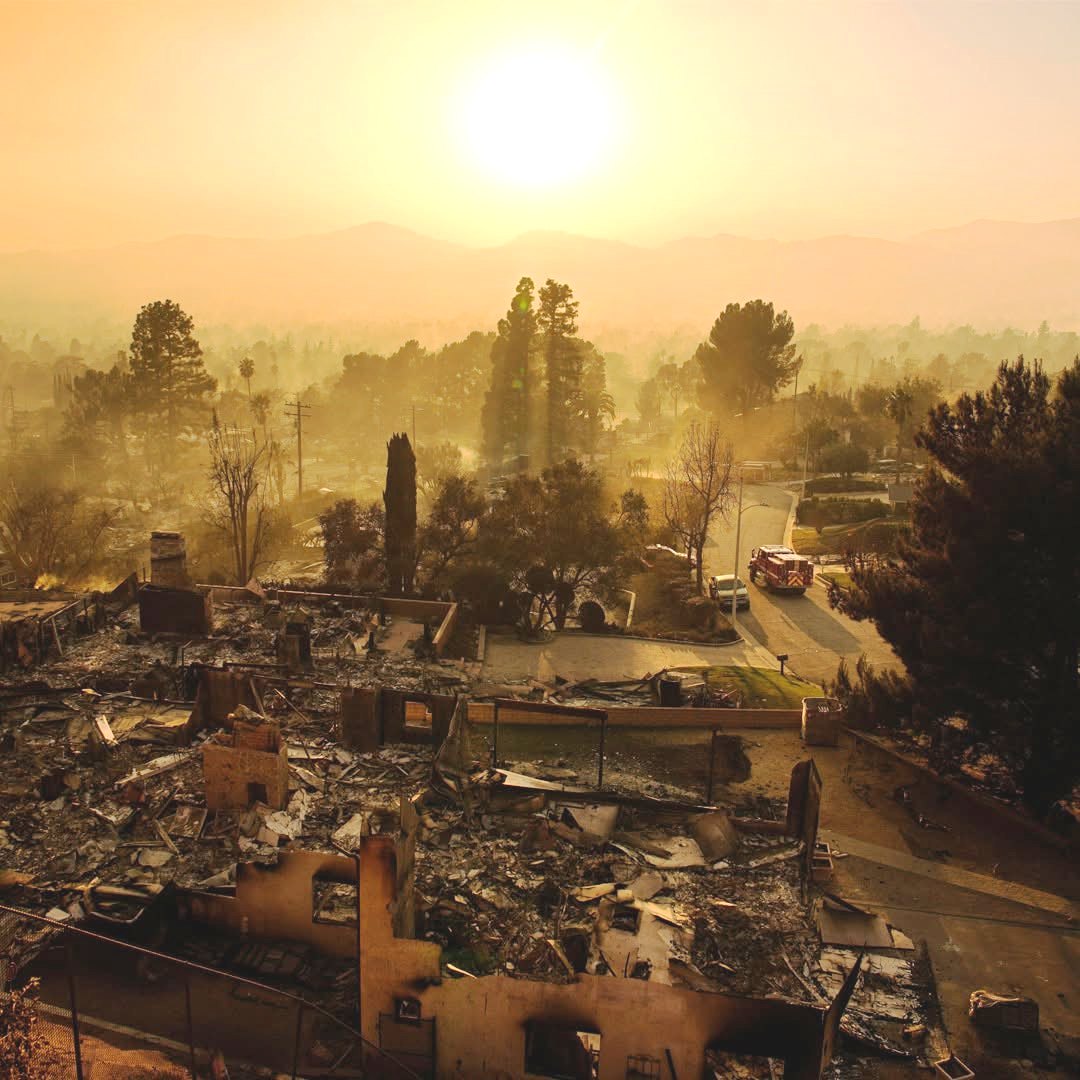 The remains of the house
in Altadena, Los Angeles, to which
the late Gary Indiana's library had been
delivered just the previous day.
Atmospheric carbon dioxide.
Recent decades' data from direct
atmospheric measurement.
Older glacial-interglacial data from air
trapped in Antarctic ice cores.
|
New Year 2025 2024 sees the Earth top 1.5°C warming while wildfires rage in California. We are not even two weeks into 2025 and there is news of a report from the European Union's Copernicus Climate Change Service (C3S) that 2024 was the warmest year on record of global temperature, going back to 1850, at 1.6°C warmer than the pre-industrial level, making it the first calendar year to exceed 1.5°C above that level: 1.5°C above pre-industrial is the limit set by the 2015 Paris Climate Accord.
Now, while this is not unexpected, it is not completely bad news in terms of the 2015 Paris Accord as that calls for the long-term temperature to be below 1.5°C above pre-industrial. In reality, this decade we may expect the occasional year to be below 1.5°C before we move into a time when all years are above 1.5°C above pre-industrial, so feel free to grasp at that straw if it makes you happy. Meanwhile, those who have visited this site before will be aware of my view going back decades and even my now one-and-a-half decade old essay 'Can We Beat The Climate Crunch' (2009).
This news comes as wildfires rage through California (USA) causing literally billions of dollars worth of damage. While it is difficult to say, in terms of percent, how much of a specific event such as this is attributable to climate change but these fires come after three months of exceptional drought in that area making the woodland prone to wildfires. That in a warmer world there are expected to be more extreme events (temperature, drought and heavy rainfall) has long been known, and the 2007 IPCC Assessment Report (AR4) has a simple, excellent, explanatory graphic as to why (see left – © IPCC used here non-commercially). And indeed that extreme events increase in a warmer world has also been covered by the key news media. For those into the actual science, the peer-reviewed literature is awash with research. To take just two examples from just last year (2024): longer-than-expected dry spells anticipated with warming and drought triggers and sustains overnight fires in North America.
The fires have impacted many including members of two of the broader communities to which I belong: science and, its counterpart in the arts, that of the speculative fiction world. Sadly, some folk have lost literally all their belongings, save what they could pack at short notice into a car or even carry by hand. Fortunately, so far, nobody I personally know has lost everything, but I do know folk affected by potential evacuation warnings and air quality, and all of these friends do know someone whose house was destroyed!
All of which makes it deeply concerning that some in the political class seek to use this for perceived political leverage. The expression 'fiddling while Rome burns' springs to mind...
Perhaps the most unfortunate arts loss, at least in terms of sheer timing, was that of the writer, the late Gary Indiana's, personal library. He had passed in his New York apartment three months earlier. It was decided to archive his personal library in Altadena, Los Angeles, California, at a resident for artists for them to use as a resource. It arrived there just a day before the fires reached that street and completely destroyed the house and the library.
Stop Press: And hot on the heels of all of this comes news from Hawaii that 2024 saw the greatest annual rise in a carbon dioxide levels, the principal, anthropogenic (human-generated) greenhouse gas driving global warming. Now, do not make the mistake of thinking that this increase in atmospheric carbon dioxide is commensurate with a similar increase in human emissions of the gas: more of a factor is a decrease in carbon dioxide sinks. Both oceans and forests (among a number of other sinks) absorb carbon dioxide from the atmosphere. On one hand there is a limit to the amount the oceans will absorb – there will be a point when an equilibrium is achieved – and factors such as deforestation and wildfires prevent absorption by forests: both these factors are most likely involved in the 2024 surge in atmospheric carbon dioxide. This is yet another reason as to why reducing emissions of this gas is so important!
|
| |